


Importance of Buoy Placement in Maritime Safety
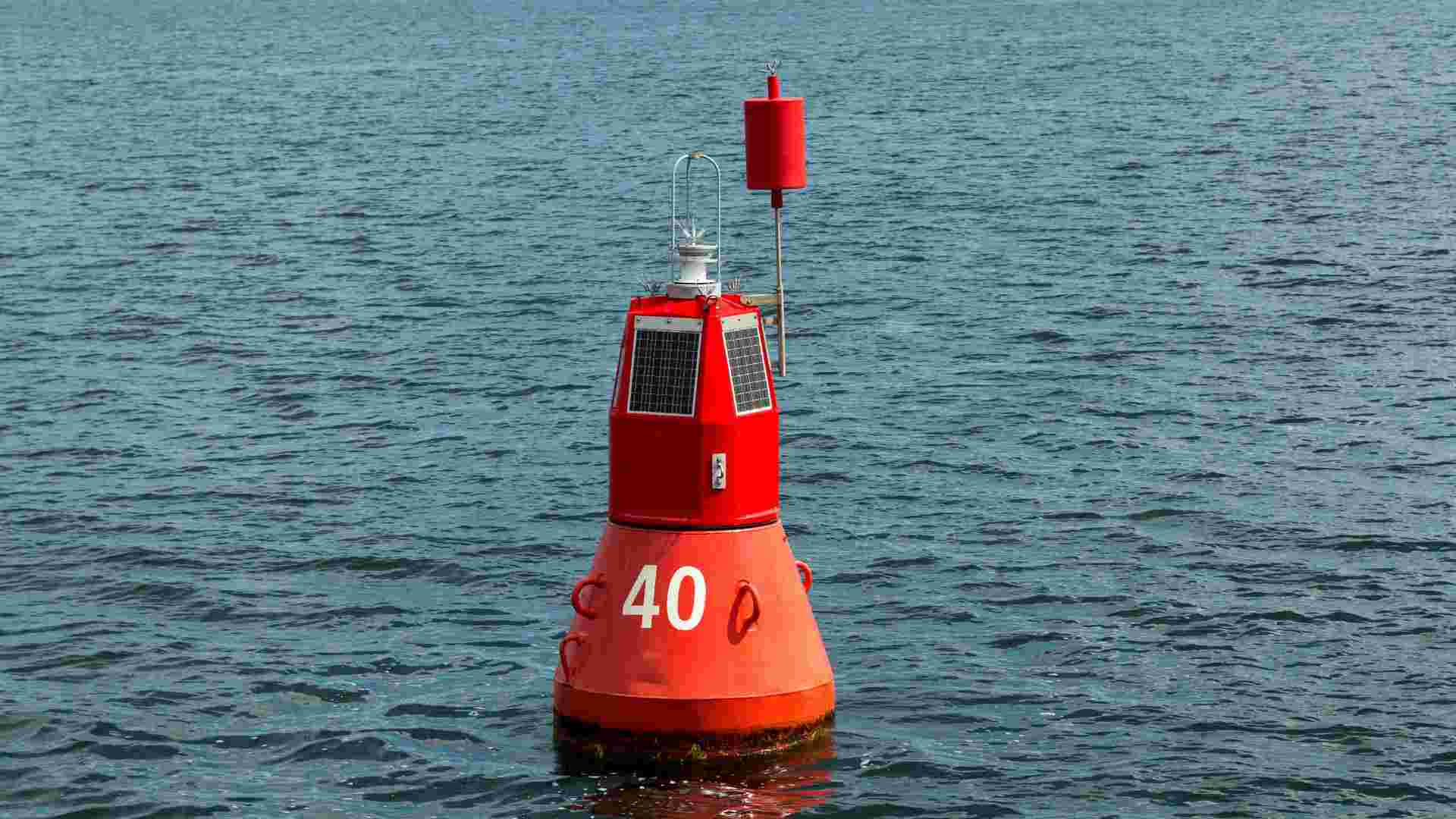
When a ship captain navigates a vessel through a crowded harbor or a treacherous coastal passage, they are relying on a complex, largely invisible infrastructure. While we often marvel at the size of modern ships or the technology on their bridges, the unsung heroes of maritime safety are the colorful markers bobbing on the water’s surface. However, a buoy is only useful if it is in exactly the right spot.
The strategic positioning of these navigational aids is a precise science that balances hydrodynamics, traffic management, and risk assessment. The fundamental purpose of buoys is to communicate information to mariners, but that communication fails if the placement is even slightly off. A buoy placed too far into a channel can become a collision hazard itself; one placed too far out might lead a ship into shallow water.
In this deep dive, we will explore the critical importance of buoy placement. We will examine how authorities determine where to drop these anchors, the specific roles of different types of buoy, and how correct positioning prevents disasters at sea.
The Strategy Behind the Safety
To the untrained eye, buoys might seem scattered randomly across the water. In reality, every single marker is part of a carefully orchestrated system, likely the International Association of Marine Aids to Navigation and Lighthouse Authorities (IALA) maritime buoyage system.
The primary purpose of buoys is to provide a visual confirmation of position. While GPS and electronic charts are standard, they are susceptible to signal loss, jamming, or system errors. A physical buoy acts as the ultimate "ground truth." If the chart says the channel edge is here, and the buoy is there, the captain trusts their eyes. This makes the accuracy of placement a matter of life and death.
Strategic placement serves three critical functions:
- Defining Safe Water: Clearly outlining where a ship can and cannot go.
- Highlighting Hazards: Pinpointing specific dangers like wrecks or rocks.
- Regulating Traffic: Creating lanes to separate moving vessels, much like highway dividers.
Factors Influencing Buoy Placement
Deciding where to place a navigational aid is an engineering challenge. Maritime authorities, such as the Coast Guard or local port administrations, must consider a multitude of dynamic factors.
Water Depth and Seabed Topography
The most obvious factor is depth. A lateral buoy marking the edge of a channel must be placed exactly where the safe depth ends and the shallow bank begins. If placed too conservatively (too far into deep water), it artificially narrows the channel, restricting traffic flow. If placed too aggressively (too far into the shallows), a large vessel might run aground while thinking it is safe.
Environmental Conditions
The ocean is not a static environment. Tides, currents, and wave action all affect a buoy's position.
- Watch Circle: A buoy is anchored by a chain. As the tide rises or the current shifts, the buoy moves in a circle around its anchor. Planners must calculate this "watch circle" to ensure that even at low tide or high current, the buoy doesn't drift into the channel or away from the hazard it is marking.
- Ice and Storms: In regions prone to ice (like the Baltic Sea or the Great Lakes) or hurricanes, buoys must be placed where they are less likely to be dragged off station or crushed.
Traffic Density and Vessel Type
A channel used by small fishing boats has different requirements than one used by Ultra Large Crude Carriers (ULCCs).
- Spacing: For large ships that take miles to stop or turn, buoys must be placed at intervals that allow for long-range visibility.
- Turning Basins: In areas where ships turn, placement is critical to define the maximum swing radius safe for the vessel.
Key Types of Buoy and Their Positional Roles
Different navigational situations call for specific visual aids. The IALA system standardizes these tools, but their effectiveness relies entirely on context-aware placement. Here is how different types of buoy are positioned to maximize safety.
Lateral Markers: Defining the Road
Lateral markers are the most common buoys, used to define the port (left) and starboard (right) sides of a route.
- Placement Strategy: These are placed in pairs or staggered lines to create a "gate" effect. In winding rivers, they are positioned on the bends to show the maximum curvature of the channel. This helps pilots judge their rate of turn.
- Specific Function: Their positioning is vital for "spatial awareness." By looking ahead at the line of lateral buoys, a captain can visually estimate the channel's path miles ahead, allowing for smoother, safer course corrections.
Cardinal Markers: Navigation by Compass
Cardinal markers indicate the direction of safe water relative to a hazard using compass points (North, South, East, West).
- Placement Strategy: These are placed specifically around large or expanding hazards, such as a reef or a sandbank. For example, a South Cardinal buoy is placed directly south of a danger, telling ships "Pass to the South of me."
- Specific Function: They are crucial in open water where a channel isn't clearly defined. Their placement allows ships to choose their own safe route while maintaining a safe distance from the obstacle.
Isolated Danger Markers
These markers are placed directly over a specific hazard of limited extent, which has navigable water all around it.
- Placement Strategy: Precision is key here. The buoy is anchored as close to the hazard (like a submerged rock or wreck) as possible without the anchor chain fouling on the obstruction.
- Specific Function: They act as a "do not touch" sign. Because ships can pass on any side, the placement must be incredibly accurate to prevent a vessel from clipping the hazard while trying to pass close by.
Safe Water Markers
Also known as fairway buoys, these red and white striped markers indicate that there is navigable water 360 degrees around them.
- Placement Strategy: They are typically placed at the "landfall" point—the beginning of a channel approach from the open sea—or in the exact center of a wide channel.
- Specific Function: They serve as a homing beacon. A ship arriving from a trans-oceanic voyage will aim specifically for this buoy's position to safely enter the port system.
Special-Purpose Buoys
These yellow buoys mark areas that aren't necessarily navigational hazards but are significant for other reasons, such as aquaculture zones, anchorages, or scientific instruments.
- Placement Strategy: They are placed to create a perimeter or boundary. For example, around a marine farm, they define the "no-go" zone to prevent propellers from tangling in nets.
- Specific Function: By clearly marking areas reserved for other uses, they prevent conflict between commercial shipping and other maritime activities.
The Consequence of Poor Placement
When buoy placement fails, the consequences can be catastrophic.
- Groundings: If a lateral buoy drifts off station into deep water, a ship hugging the line might run onto a sandbar.
- Collisions: If traffic separation buoys are not spaced correctly, vessels might drift into opposing lanes, especially in fog or heavy rain.
- Confusion: "Buoy clutter" is a real risk. If too many markers are placed in a small area without clear strategic intent, the visual picture becomes confusing (a "forest of lights"), causing pilots to lose their orientation.
Conclusion
The science of maritime safety is often a game of inches played on a field of miles. The purpose of buoys extends far beyond being simple floating metal cans; they are the physical manifestation of nautical charts and safety regulations. Through the rigorous assessment of depth, environment, and traffic patterns, maritime authorities ensure that these aids provide the most accurate guidance possible.
As vessels become larger and waterways more crowded, the precision of buoy placement becomes ever more critical. From the lateral markers guiding a tanker into port to the cardinal buoys protecting a fragile reef, each of the different types of buoy plays a vital role in keeping our oceans safe, provided they are exactly where they need to be.
 Romaian
 English
 Arabic
 French
 Spanish
 Portuguese
 Deutsch
 Turkish
 Dutch
Dutch
 Italiano
 Russian
 Portuguese (Brazil)
 Greek
Greek
