


Why Are Businesses Prioritizing CRM Development in Their Digital Strategies?
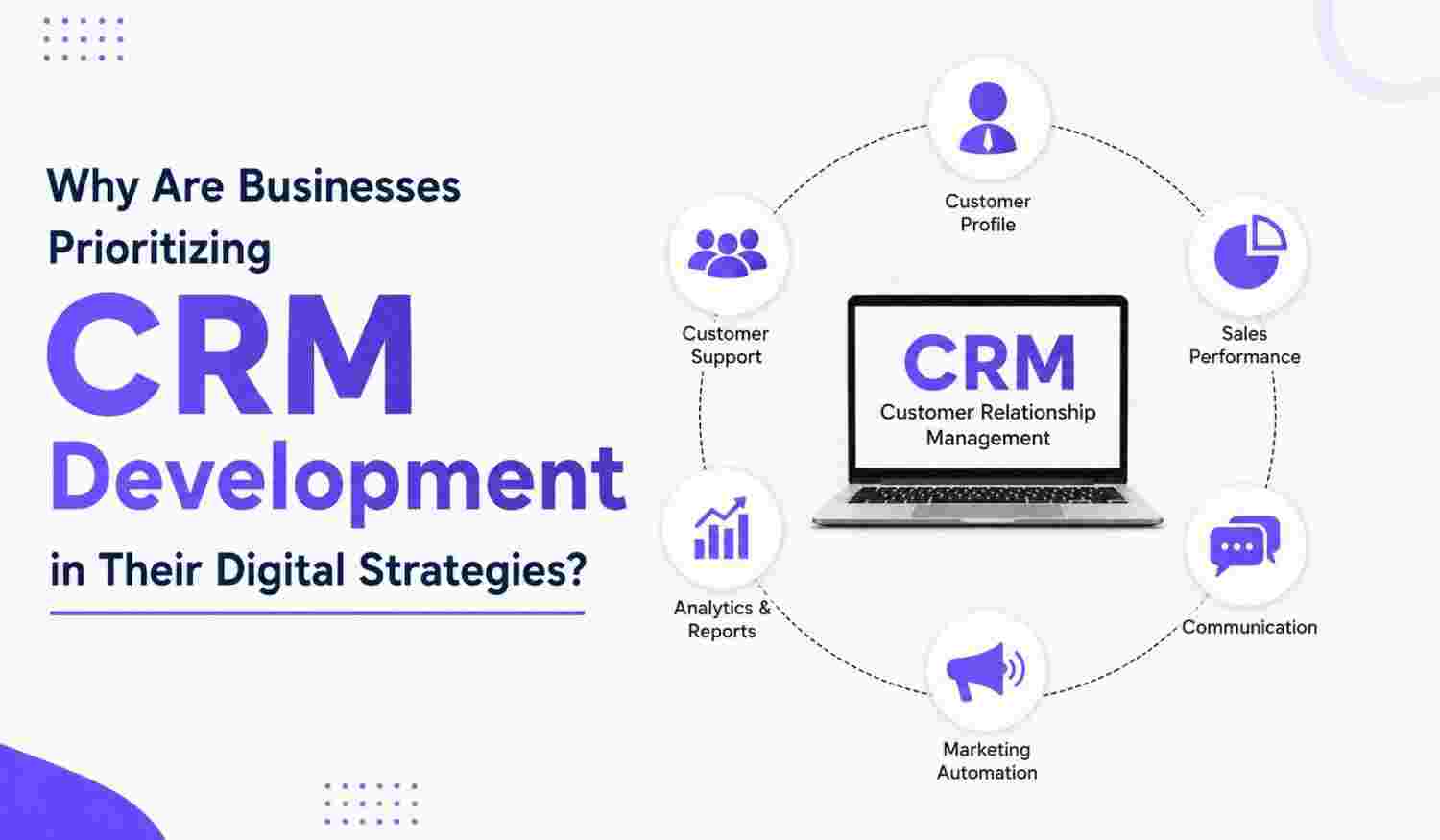
Digital transformation conversations often begin with technology, but they almost always end with customers. Businesses today face growing expectations for personalized experiences, faster responses, and seamless interactions across multiple channels. Managing these expectations with spreadsheets, disconnected applications, and overflowing inboxes can feel like trying to organize a library using sticky notes. That approach works—until it doesn't. CRM development has become a critical part of modern business strategy because it creates structure around customer relationships. As organizations pursue sustainable growth, customer-focused technology is moving from the wish list directly to the priority list.
The Shift from Product-Centric to Customer-Centric Business Strategies
Business success once depended heavily on offering a superior product. While quality still matters, customer experience has become equally important. Buyers now compare service quality, responsiveness, and personalization before making purchasing decisions. Organizations that understand customer preferences gain a significant competitive advantage. CRM systems support this shift by providing a complete view of customer interactions, behaviors, and needs. Rather than making decisions based on assumptions, teams can rely on accurate data. Digital strategies increasingly revolve around creating meaningful customer experiences, making CRM platforms a foundational business investment.
Centralizing Customer Data for Better Decision-Making
Customer information often lives in multiple places—emails, spreadsheets, support systems, sales tools, and employee notes. Finding accurate information can become a daily scavenger hunt. Centralized CRM solutions solve this challenge by creating a single source of truth. Teams gain immediate access to updated customer records, interaction histories, and performance metrics. Better visibility leads to better decisions across sales, marketing, and customer service functions. When everyone works from the same information, collaboration improves naturally. Strategic planning also becomes easier because leaders can identify trends based on complete and reliable data.
How CRM Development Enhances Sales Performance
Sales teams spend a surprising amount of time managing administrative tasks instead of selling. Following up with leads, updating records, scheduling reminders, and tracking opportunities can quickly consume valuable hours. CRM development helps automate these repetitive activities while providing better visibility into the sales pipeline. Representatives can prioritize high-value prospects and respond faster to opportunities. Managers gain real-time insights into performance and forecasting. Sales processes become more consistent and scalable. Organizations that streamline these workflows often discover that productivity improvements arrive much faster than expected.
Strengthening Customer Retention Through Personalized Engagement
Acquiring new customers remains important, but retaining existing customers often delivers greater long-term value. Personalized engagement plays a major role in customer loyalty. CRM systems help businesses understand purchasing behavior, communication preferences, and customer history. This information allows teams to deliver relevant interactions rather than generic messages. Customers appreciate businesses that remember their needs and respond accordingly. Stronger relationships naturally lead to repeat purchases and referrals. Successful organizations recognize that customer retention is not accidental—it is the result of consistent, data-driven engagement supported by the right technology.
Automating Business Processes and Reducing Manual Work
Manual processes may seem manageable at first, but they often create bottlenecks as organizations grow. Repetitive tasks increase the risk of delays, inconsistencies, and human error. CRM solutions help automate workflows such as lead assignments, follow-up reminders, customer onboarding, and support ticket management. Teams spend less time on administrative work and more time on strategic initiatives. Productivity gains often appear across multiple departments simultaneously. Automation also creates consistency, ensuring important tasks are completed on schedule. Business growth becomes much easier when systems handle routine operations efficiently.
Supporting Marketing Teams with Data-Driven Campaigns
Modern marketing depends on data. Sending the same message to every customer rarely produces meaningful results. CRM platforms help marketing teams segment audiences based on demographics, behaviors, interests, and purchasing history. Campaigns become more targeted, relevant, and effective. Performance tracking capabilities provide valuable insights into what works and what requires adjustment. Better collaboration between sales and marketing departments further improves outcomes. Shared customer data creates alignment throughout the customer journey. Marketing strategies become more efficient because decisions are based on measurable information rather than assumptions.
Custom CRM Development vs. Off-the-Shelf Solutions
Off-the-shelf CRM platforms can provide a useful starting point, but they may not always align with unique business requirements. Organizations often discover limitations when workflows become more specialized. Custom CRM development offers flexibility, scalability, and functionality tailored to specific operational needs. Features can be designed around existing processes rather than forcing teams to adapt to software restrictions. Partnering with a CRM software development company enables businesses to create solutions that support long-term objectives. Customization often results in improved adoption rates and stronger returns on technology investments.
CRM Integration as a Core Part of Digital Transformation
Digital transformation is not about adding more software—it is about making technology work together. CRM systems frequently serve as the central hub connecting sales, marketing, customer service, accounting, and operational platforms. Integration eliminates data silos and reduces the need for duplicate data entry. Information flows seamlessly between departments, improving efficiency and accuracy. Employees spend less time switching between systems and more time serving customers. Organizations pursuing digital maturity often discover that CRM integration becomes one of the most impactful steps toward building a connected and responsive business environment.
Scalability and Future Business Growth
Growth is exciting until outdated systems begin slowing everything down. Businesses that expand their customer base, product offerings, or service areas need technology capable of keeping pace. Custom CRM solutions are designed with scalability in mind. New users, workflows, and functionalities can be added without disrupting operations. This flexibility helps organizations adapt to changing market conditions and evolving customer expectations. Future growth becomes easier to manage because the technology foundation is already in place. Strategic investments in CRM development often support business objectives for years rather than months.
A Real-World Observation from CRM Projects
Over the years, we have worked with organizations that managed customer relationships using a collection of spreadsheets, sticky notes, emails, and what could only be described as optimistic memory. One business spent hours each week searching for customer information hidden across multiple systems. After implementing a customized CRM solution, response times improved dramatically, and operational confusion declined. Team members no longer needed to become part-time detectives. Experiences like these reinforce a simple truth—businesses grow faster when information is organized, accessible, and actionable.
Why Businesses Choose to Hire CRM Developer Expertise
CRM implementation involves much more than installing software. Every business has unique workflows, objectives, and customer engagement requirements. Organizations often choose to hire CRM developer professionals because specialized expertise helps ensure successful implementation and customization. Experienced developers can identify inefficiencies, recommend improvements, and create solutions aligned with long-term goals. Technical guidance also reduces the risk of costly mistakes during development. Businesses gain access to tailored functionality rather than settling for generic features. Expert support transforms CRM technology from a simple tool into a strategic business asset.
Emerging CRM Trends Shaping Digital Strategies
Technology continues to evolve, and CRM platforms are evolving alongside it. Artificial intelligence, predictive analytics, advanced automation, and customer journey mapping are becoming standard capabilities rather than optional enhancements. Mobile accessibility ensures employees can manage customer relationships from virtually anywhere. Hyper-personalization allows businesses to deliver highly relevant experiences at scale. Cloud-based ecosystems further improve flexibility and collaboration. Organizations investing in CRM development today are preparing for tomorrow's opportunities. Staying ahead of these trends helps businesses maintain competitiveness while continuing to improve customer satisfaction and operational performance.
Artificial Intelligence and Predictive Analytics
Artificial intelligence is transforming how businesses understand and engage customers. Modern CRM platforms can analyze historical interactions, identify behavioral patterns, and predict future customer actions. Sales teams can prioritize leads more effectively, while marketing teams can create targeted campaigns based on data-driven insights. Predictive analytics reduces guesswork and improves decision-making across departments. Businesses no longer need to react after opportunities appear. Instead, they can anticipate customer needs and respond proactively. This shift from reactive management to predictive engagement is becoming a major driver of CRM adoption.
Mobile CRM Accessibility
Work no longer happens exclusively behind a desk. Sales representatives, managers, and support teams frequently operate from multiple locations throughout the day. Mobile CRM accessibility ensures critical customer information remains available whenever needed. Employees can update records, review customer histories, and manage tasks directly from smartphones or tablets. Faster access to information improves responsiveness and customer satisfaction. Mobile functionality also supports remote and hybrid work environments. Organizations benefit from greater flexibility while maintaining consistent customer engagement regardless of where team members are located.
Advanced Customer Journey Mapping
Understanding the customer journey has become essential for delivering exceptional experiences. CRM systems help organizations track interactions across multiple touchpoints, from initial awareness through post-purchase support. Detailed journey mapping reveals where customers encounter friction, delays, or opportunities for engagement. Businesses can then refine processes and improve communication strategies. Better visibility into customer experiences supports stronger relationships and higher retention rates. Organizations that understand the complete customer journey are better positioned to create seamless interactions that encourage loyalty and long-term business growth.
Hyper-Personalization
Generic customer interactions are becoming increasingly ineffective. Today's consumers expect businesses to understand their preferences, interests, and needs. CRM platforms enable hyper-personalization by combining customer data, behavioral insights, and automation capabilities. Personalized product recommendations, targeted content, and customized communications create more meaningful experiences. Customers feel valued when businesses deliver relevant information rather than mass-produced messaging. Hyper-personalization also improves conversion rates because interactions align more closely with customer expectations. Businesses investing in advanced CRM capabilities are finding that personalization has become a competitive necessity rather than a luxury.
Cloud-Based CRM Ecosystems
Cloud technology has significantly changed how businesses deploy and manage CRM systems. Cloud-based platforms offer greater accessibility, scalability, and cost efficiency compared to traditional infrastructure models. Teams can access information securely from virtually any location with internet connectivity. Software updates, maintenance, and security enhancements are handled more efficiently, reducing administrative burdens. Cloud ecosystems also simplify integrations with other business applications. As organizations continue embracing digital transformation initiatives, cloud-based CRM solutions remain a preferred option for supporting growth, flexibility, and operational resilience.
Measuring the ROI of CRM Development
Technology investments should deliver measurable results, and CRM development is no exception. Organizations often evaluate return on investment through metrics such as lead conversion rates, customer retention, sales growth, and operational efficiency improvements. Reduced administrative workloads and enhanced collaboration also contribute significant value. While financial returns are important, customer satisfaction improvements frequently provide equally meaningful benefits. Businesses that track performance consistently gain a clearer understanding of how CRM solutions support strategic objectives. Successful implementations often demonstrate value across multiple departments simultaneously.
Conclusion
Customer relationships have become one of the most valuable assets a business can possess. Digital strategies increasingly focus on understanding customers, improving experiences, and building lasting engagement. CRM development supports all of these objectives while creating operational efficiencies that drive growth. Businesses that invest in tailored solutions position themselves to adapt quickly, compete effectively, and serve customers more intelligently. Technology trends will continue to evolve, but one principle remains constant—organizations that place customers at the center of their strategy are far more likely to succeed in an increasingly competitive marketplace.
FAQs
What is CRM development?
CRM development involves creating or customizing customer relationship management software to help businesses manage customer interactions, sales processes, marketing activities, and support operations more effectively.
Why is CRM important for digital transformation?
CRM centralizes customer data, improves collaboration, automates workflows, and supports data-driven decision-making, making it a key component of digital transformation initiatives.
How does a custom CRM differ from a standard CRM platform?
Custom CRM solutions are tailored to specific business requirements, while standard platforms offer predefined features designed for general use across multiple industries.
When should a business invest in CRM development?
Businesses should consider CRM development when customer data becomes difficult to manage, workflows become inefficient, or growth demands more advanced operational capabilities.
Can CRM software integrate with existing business systems?
Yes. CRM platforms can integrate with accounting software, ERP systems, marketing tools, customer support platforms, and many other business applications.
What industries benefit most from CRM solutions?
Industries such as healthcare, real estate, finance, manufacturing, education, eCommerce, and professional services commonly benefit from CRM implementation.
How long does custom CRM development typically take?
Development timelines vary depending on project complexity, required features, integrations, and customization needs. Projects may range from several weeks to several months.
What should businesses look for in a CRM development partner?
Businesses should evaluate technical expertise, industry experience, customization capabilities, communication processes, and long-term support services.
Is cloud-based CRM better than on-premise CRM?
Cloud-based CRM solutions often provide greater flexibility, scalability, accessibility, and lower maintenance requirements, though specific business needs should guide the decision.
How can CRM software improve customer retention?
CRM systems help businesses deliver personalized experiences, respond quickly to customer needs, track engagement history, and build stronger long-term relationships.
 Italiano
 English
 Arabic
 French
 Spanish
 Portuguese
 Deutsch
 Turkish
 Dutch
Dutch
 Russian
 Romaian
 Portuguese (Brazil)
 Greek
Greek
