


What To Know Before Implementing Workplace Safety Management Software
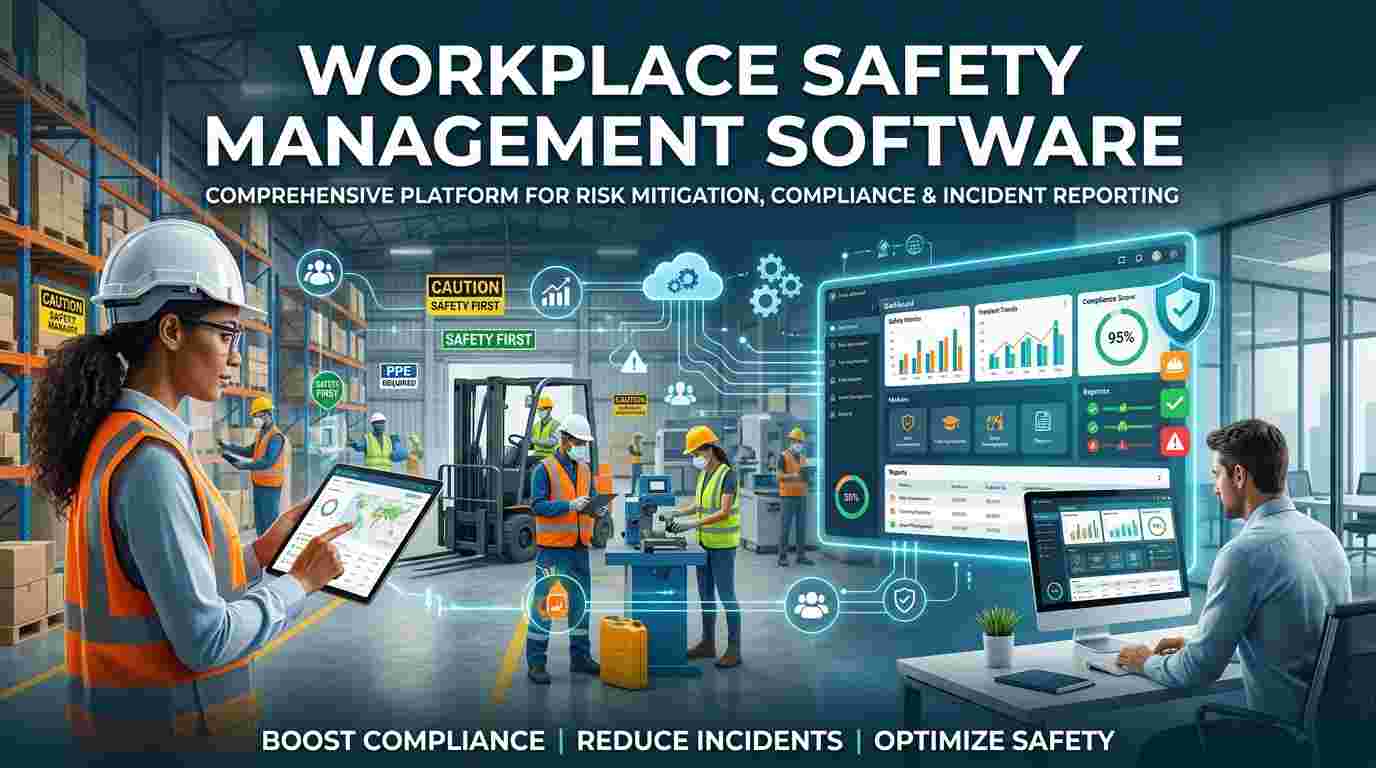
What To Know Before Implementing Workplace Safety Management Software
Workplace safety remains one of the most important responsibilities for organizations across every industry. Whether a company operates in construction, manufacturing, healthcare, logistics, energy, or corporate environments, maintaining a safe workplace requires consistent planning, monitoring, and improvement. As businesses seek more efficient ways to manage safety programs, many are investing in workplace safety management software to streamline operations and strengthen safety performance.
While the benefits of workplace safety management software are significant, successful implementation requires careful planning. Organizations must evaluate their safety objectives, operational requirements, compliance obligations, and workforce needs before selecting and deploying a solution. Taking the time to understand these factors can help ensure a smoother implementation process and better long term results.
Before adopting a safety management platform, there are several important considerations every organization should understand.
Why companies implement safety management software
Traditional safety processes often rely on paper forms, spreadsheets, emails, and manual reporting methods.
These approaches can create challenges such as
- Delayed reporting
- Inconsistent documentation
- Limited visibility
- Administrative inefficiencies
- Difficulty tracking corrective actions
Workplace safety management software helps address these issues by centralizing safety activities within a digital platform.
Define clear safety objectives
Before implementing any software, organizations should identify their primary goals.
Common objectives may include
- Reducing workplace incidents
- Improving compliance management
- Streamlining inspections
- Enhancing hazard reporting
- Strengthening employee engagement
Clearly defined goals help guide software selection and implementation planning.
Understand your current safety processes
Evaluating existing safety procedures is an important first step.
Organizations should review
- Incident reporting workflows
- Inspection procedures
- Training programs
- Compliance activities
- Documentation practices
Understanding current processes helps identify areas where software can provide the greatest value.
Assess regulatory and compliance requirements
Many industries must comply with workplace safety regulations and industry standards.
Before choosing a solution, businesses should determine whether the software can support
- Compliance documentation
- Audit preparation
- Regulatory reporting
- Record retention requirements
Compliance support is often one of the most important factors in software selection.
Evaluate hazard reporting capabilities
Hazard identification plays a major role in accident prevention.
A strong workplace safety management software solution should allow employees to
- Report hazards easily
- Submit observations
- Upload supporting evidence
- Track issue resolution
Simple reporting processes encourage employee participation.
Consider incident management features
Incident reporting and investigation are critical functions of safety software.
Organizations should evaluate whether the system can support
- Incident documentation
- Investigation workflows
- Root cause analysis
- Corrective action tracking
Effective incident management helps improve safety performance over time.
Review safety inspection tools
Inspections help organizations identify risks before incidents occur.
When evaluating software, consider features such as
- Digital inspection forms
- Mobile inspection access
- Automated reporting
- Corrective action management
These capabilities can improve inspection efficiency and consistency.
Examine training management functionality
Employee training is a key component of workplace safety.
Organizations should assess whether the platform can
- Schedule training sessions
- Track participation
- Monitor certifications
- Store training records
Training management features help maintain workforce readiness.
Plan for employee adoption
Even the best software will provide limited value if employees do not use it.
Successful implementation often depends on
- User friendly design
- Employee training
- Clear communication
- Leadership support
Organizations should develop strategies that encourage adoption throughout the workforce.
Evaluate mobile accessibility
Many employees work away from desks or offices.
Mobile access can be especially valuable for
- Field workers
- Construction teams
- Manufacturing staff
- Inspectors
A mobile friendly workplace safety management software platform helps improve participation and reporting accuracy.
Consider integration requirements
Most organizations use multiple business systems.
Before implementation, determine whether the software can integrate with
- Human resource systems
- Enterprise resource planning platforms
- Document management systems
- Training systems
Integration helps improve efficiency and reduce duplicate data entry.
Assess reporting and analytics capabilities
Data driven decision making is becoming increasingly important in workplace safety.
A quality platform should provide
- Safety dashboards
- Incident trend analysis
- Compliance reports
- Inspection performance metrics
These insights help organizations monitor and improve safety performance.
Evaluate scalability
Business needs often change over time.
Organizations should consider whether the software can support
- Workforce growth
- Additional locations
- Expanded safety programs
- Future operational requirements
Scalable solutions provide greater long term value.
Focus on data security
Safety systems often store sensitive business information.
Important security considerations include
- User authentication
- Access controls
- Data encryption
- Backup procedures
Strong security measures help protect organizational data.
Develop an implementation strategy
A structured implementation plan improves the likelihood of success.
Important steps may include
- Defining project goals
- Assigning responsibilities
- Configuring the software
- Training users
- Monitoring adoption
Careful planning helps reduce implementation challenges.
Prepare leadership involvement
Leadership support plays an important role in software adoption.
Management can contribute by
- Promoting safety initiatives
- Encouraging participation
- Supporting training efforts
- Monitoring progress
Visible leadership involvement often increases employee engagement.
Establish performance metrics
Organizations should determine how success will be measured.
Possible metrics include
- Incident reduction rates
- Hazard reporting activity
- Inspection completion rates
- Training participation levels
- Compliance performance
Performance measurement helps evaluate software effectiveness.
Understand the importance of change management
Introducing new technology often requires changes in workplace habits and procedures.
Effective change management may include
- Communication plans
- User education
- Feedback collection
- Ongoing support
Managing change carefully helps improve user acceptance.
Benefits of implementing workplace safety management software
When implemented successfully, organizations may experience several advantages.
| Benefit | Impact |
|---|---|
| Centralized safety data | Improved visibility |
| Faster hazard reporting | Better risk management |
| Automated workflows | Increased efficiency |
| Compliance support | Easier audit preparation |
| Data analytics | Better decision making |
These benefits contribute to stronger safety programs and operational performance.
Common implementation challenges
Organizations may encounter challenges during deployment such as
- Resistance to change
- Limited user training
- Data migration issues
- Process alignment concerns
Understanding these risks in advance allows businesses to prepare appropriate solutions.
Future trends in workplace safety software
Technology continues to influence workplace safety management.
Future developments may include
- Artificial intelligence based analytics
- Predictive risk monitoring
- Advanced mobile applications
- Automated compliance management
These innovations may further improve safety program effectiveness.
Why preparation matters
The success of a workplace safety management software implementation depends largely on preparation.
Organizations that carefully evaluate their needs, involve stakeholders, and plan thoroughly are often better positioned to achieve their safety objectives and maximize return on investment.
Final thoughts
Implementing workplace safety management software can significantly improve hazard reporting, incident management, compliance tracking, inspections, training administration, and overall safety performance. However, successful adoption requires thoughtful planning, clear objectives, employee engagement, and ongoing support.
 English
 Arabic
 French
 Spanish
 Portuguese
 Deutsch
 Turkish
 Dutch
Dutch
 Italiano
 Russian
 Romaian
 Portuguese (Brazil)
 Greek
Greek
