


Rajat Khare on the Future of AI-Powered Short Video Technology
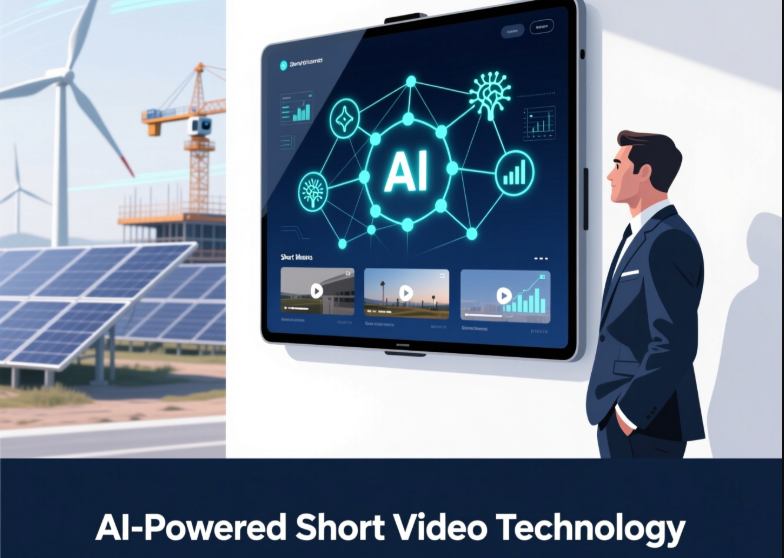
One of the major results of the advancing automation and the AI-assisted short video technology for remote inspection is the industries of infrastructure, energy, manufacturing, and construction using it as a powerful tool. This cutting-edge technology in its most simplified manner permits machines to inspect the short video clips taken at the remote locations and find out the default, structural discrepancies, or safety hazards without a human inspector having to be present onsite.
Rajat Khare, founder of Boundary Holding, is our guiding star in this article, where we will explain the technology, the applications, advantages, drawbacks, and the other established companies.
Why AI + Short Video for Inspections?
In the past, detection and prevention of issues related to industrial systems would depend majorly on field audits, visits, and the costly and expensive itinerary of the inspection process. The old way was:
-
Time-consuming
-
Cost-intensive
-
Prone to delays (weather, logistics)
-
Not friendly to the environment (carbon emissions from travel)
The AI-enabled video inspections take away most of this burden. The process is as follows:
-
Data capture: At the sites of interest, drones, mobile cameras, or fixed cameras are used to record short clips of video.
-
Transmission: The videos are either uploaded or streamed in a secure manner to a central server or cloud.
-
Analysis: Vision and machine learning models process the video frames in real-time or nearly-real-time. The AI finds anomalies cracks, corrosion, misalignment, leaks, faults, safety risks.
-
Alert & guidance: The system produces alerts, visual overlays, or corrective steps that are recommended (for example “Replace this bracket,” or “Safety barrier misaligned”).
-
Learning loop: An initial data flow leads to AI model improvement over time reducing false positives and detection confidence enhancement.
This method provides ongoing surveillance, less human error, and a drastic decrease in the requirement for workers on-site.
The Real-World Use Cases and the Case Study: Enel Green Power
A strong example is the one with Enel Green Power, a global player in the renewable energy sector. For the construction of solar or wind farms (which the price estimated US$200-400 million), the data flow from contractors is vital. Conventional methods are ineffective:
-
Continuous travel to far-off locations
-
Field reports taking a long time to be compared
-
Incompatible processes
As a solution, Enel’s engineers started to incorporate short video evidence into the inspection process. Contractors sent short video clips with the forms for inspection. With the help of remote video verification, Enel could:
-
Do remote data validation
-
Instantly evaluate the work done
-
Identify and correct the mistakes or defects immediately
Rather than considering video as an add-on, the team realigned their budget and inspection plan: some inspections became totally remote, which led to a considerable reduction in travel and better control.
They were able to cut back on operational downtime, increase transparency, and channel the savings into further automation.
The Reason Investors are Putting Money into This Area
Rajat Khare points out that video inspection AI is still at the beginning, and we are only experiencing the tip of the iceberg. He foresees the technology to gradually spread over:
-
Power and utilities
-
Manufacturing and process industries
-
Oil and gas infrastructure
-
Building and civil engineering
-
Towers, pipelines, and wind turbines in telecom
Boundary Holding has already invested in businesses related to waste management technology, medicine, and clean technology. The alliance between them and the use of AI for inspection in the next wave of videos corresponds fully to his commitment to making large-scale and eco-friendly infrastructures possible.
Investors are positive because of the following reasons:
-
Industries are being forced to reduce costs.
-
There is an increased speed in digital transformation (post-COVID).
-
Companies are under pressure to follow ESG guidelines and reduce their carbon footprint.
-
The supply of edge compute, 5G, and affordable sensors is getting higher.
Leading Companies in the Space
The following are the main companies that are contributing to the process of AI video inspection innovation:
-
Vyntelligence: Its main product makes use of short video clips for inspection and analysis from a distance. They are in partnership with companies in utilities, energy, and industry, providing not only issue detection but also real-time insight.
-
TechSee: A platform for visual support for the telecom, utilities, and field service diagnostics industries. It provides the opportunity for users to troubleshoot remotely by either sending a video or using AR support.
-
Blitz: A company that uses AI to analyze video footage in order to detect material defects, alignment issues, and safety hazards in the construction and infrastructure sectors.
All these firms, a lot of which have either their roots or leadership in India or Europe, are revealing the international character of this change.
How the Technology Works (Technical Layers)
-
Sensing & capture
-
Fixed cameras, handheld smartphones, drones, robotic rovers
-
Multi-angle or panoramic video
-
Integration with IoT / sensor data (temperature, vibration)
-
-
Data pre-processing
-
Compression, frame selection, filtering
-
Security & encryption for transmission
-
-
AI / Computer vision
-
Object detection, segmentation, anomaly detection
-
Temporal analysis (changes over time)
-
Model ensemble or hybrid heuristics + ML
-
-
Decision intelligence & recommendations
-
Mapping detected issues to action steps
-
Prioritization, risk scoring
-
-
Feedback & learning
-
Human validation of AI alerts
-
Model retraining to reduce false alerts
-
-
Integrations & dashboards
-
Workflow tools, enterprise systems (ERP, CMMS)
-
Alerts, reporting, visualization
-
Because models evolve over time, clients see better accuracy, fewer false positives, and more intelligent predictions.
Conclusion
The use of AI for short video inspections is not a mere future expectation but rather a concept currently in deployment which results in the saving of time, money, and carbon emissions. The support of visionaries such as Rajat Khare and the backing of investors who are focused on actual application of technologies make it very likely that this innovation will ultimately become a necessity in the management of modern infrastructure.
 English
 Arabic
 French
 Spanish
 Portuguese
 Deutsch
 Turkish
 Dutch
Dutch
 Italiano
 Russian
 Romaian
 Portuguese (Brazil)
 Greek
Greek
