


EEG Software: The Brain Behind Brainwave Technology
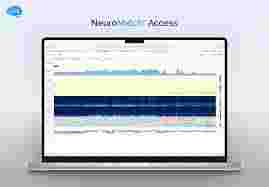
When we talk about reading the mind, we’re not speaking metaphorically anymore. Thanks to EEG software, we can now decode what’s happening in the brain in real time — analyzing patterns, measuring states of focus, and even controlling devices with thought.
But raw brain data is just that — raw. Unusable, noisy, and overwhelming.
What makes EEG data meaningful is the software behind it.
Whether you’re working in neuroscience, health tech, clinical diagnostics, or brain-computer interfaces (BCIs), EEG software is the bridge that translates electrical signals into real-world insight.
Let’s explore what EEG software is, how it works, and why it’s essential to every brain-monitoring application in use today.
What Is EEG Software?
EEG (Electroencephalography) software is the system used to record, visualize, filter, and analyze electrical activity in the brain. It works hand-in-hand with EEG hardware — turning raw signal data from scalp electrodes into meaningful output such as:
-
Brainwave graphs (alpha, beta, theta, delta)
-
Event-related potentials (ERPs)
-
Frequency band analysis
-
Source localization (in advanced cases)
-
Neurofeedback metrics
In short: the hardware captures the brain’s signals, but the software makes sense of them.
Core Functions of EEG Software
Modern EEG software offers a wide range of capabilities — from basic monitoring to deep neural analysis. Here are the essentials:
1. Data Acquisition
The software captures brain activity from electrodes in real time, storing that data for live visualization or future analysis.
2. Filtering & Preprocessing
Brain data is naturally noisy. Software helps remove eye blinks, movement artifacts, and irrelevant signals through digital filtering and artifact rejection tools.
3. Visualization
EEG data is visualized as waveforms or heatmaps, allowing researchers, clinicians, or therapists to monitor brain states easily — whether it’s a burst of attention, sleep cycles, or epileptic spikes.
4. Analysis & Processing
This includes power spectral analysis, ERP detection, time-frequency decomposition, coherence measurement, and machine learning integrations — depending on the software’s depth.
5. Real-Time Feedback
In neurofeedback or BCI applications, EEG software reacts to brain states instantly — offering visual, auditory, or haptic feedback based on brainwave changes.
Use Cases: Who Uses EEG Software and Why?
🧠 Neuroscientists
To study cognition, learning, attention, memory, or emotion by analyzing brainwave responses to stimuli.
🏥 Clinicians
To monitor seizure activity, diagnose neurological disorders, or track brain function during surgery or sleep.
🎧 Neurofeedback Practitioners
To help clients self-regulate stress, focus, or anxiety by visualizing and modifying their brainwave states in real time.
🧑💻 BCI Developers
To build systems that translate brain activity into control signals — for prosthetics, robotics, or digital interfaces.
🧪 Academic Researchers
To explore the brain's response to various conditions, environments, or interventions with high-resolution EEG datasets.
What to Look For in EEG Software
Choosing the right software depends on your goals, but key features to look for include:
-
Real-time signal display and recording
-
Multi-channel support (8, 32, 64, or 128+ electrodes)
-
Custom filtering and pre-processing options
-
Support for ERP and frequency analysis
-
Scripting or automation support (e.g., Python, MATLAB)
-
Clean, intuitive user interface
-
Compatibility with your EEG hardware
-
Data export formats (CSV, EDF, MAT, etc.)
Advanced users might also want 3D brain mapping, source localization, or AI-based classification features.
Popular EEG Software Features in 2026
EEG software has evolved far beyond waveform graphs. Today’s top platforms offer:
-
Drag-and-drop signal pipelines
-
Live brain-state classification (focus, stress, meditation)
-
Mobile compatibility (tablet or headset integration)
-
Cloud-based EEG data storage and sharing
-
Machine learning plug-ins for predictive analysis
-
Visual overlays with AR/VR environments for research or therapy
As the industry matures, software is becoming more accessible, user-friendly, and real-time capable — without sacrificing scientific rigor.
EEG Software in Consumer Devices
Consumer-grade EEG headsets are becoming more common — in fitness, wellness, gaming, and meditation products. These devices often rely on lightweight EEG software apps that provide:
-
Brain training games
-
Attention level tracking
-
Sleep and relaxation data
-
Guided meditation with neurofeedback
-
Brain-controlled interfaces for simple games or applications
While they’re not yet replacements for clinical or research-grade tools, they open new doors for personalized brain health.
The Future of EEG Software
By 2026, EEG software is expected to play a bigger role in:
-
Brain-computer interfaces for accessibility
-
Cognitive fatigue tracking in high-risk professions
-
Mental health diagnostics via passive EEG monitoring
-
AI-assisted early detection of neurological disorders
-
Gaming and immersive tech controlled by thought
It’s not just about reading the brain — it’s about understanding it in real time, and interacting with the world through it.
Final Thoughts: Powering the Brain-Tech Revolution
EEG software is the unseen engine driving some of the most exciting advancements in neuroscience, health tech, and wearable innovation.
Whether you're a scientist studying cognition, a therapist guiding neurofeedback, or a developer building mind-controlled tech — you need software that works as smart as the brain it reads.
And as EEG technology continues to evolve, the software we use will become even more powerful — turning raw brainwaves into the next frontier of human insight and connection.
 Romaian
 English
 Arabic
 French
 Spanish
 Portuguese
 Deutsch
 Turkish
 Dutch
Dutch
 Italiano
 Russian
 Portuguese (Brazil)
 Greek
Greek
