


Resistance Welder: A Comprehensive Guide for Industrial Manufacturers
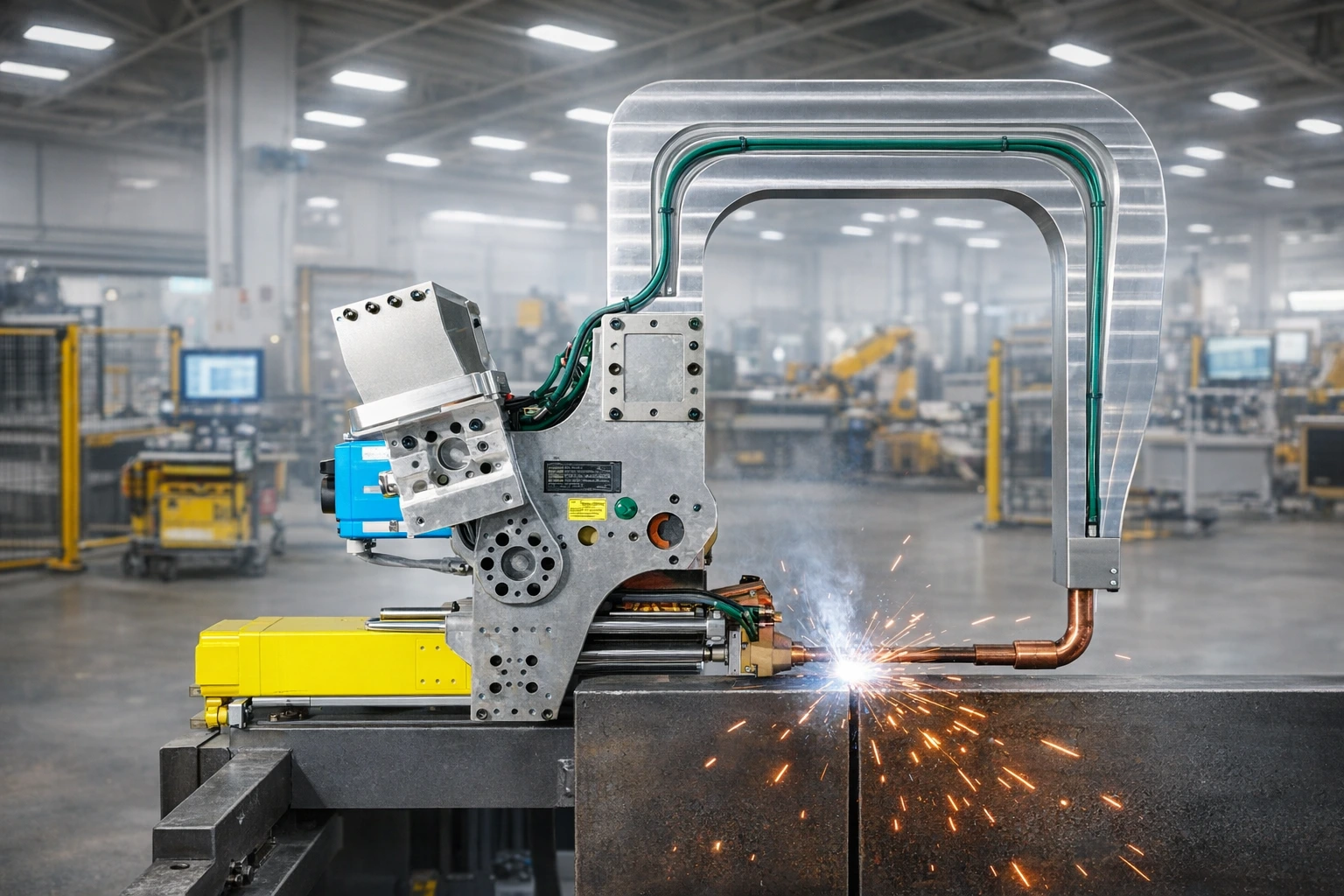
In today’s competitive manufacturing environment, precision, speed, and reliability are critical when joining metal components. A resistance welder remains a cornerstone technology for automotive, aerospace, electronics, and industrial production lines. From spot welding small sheet metals to integrating complex automated welding systems, understanding resistance welding technology is vital for engineers, OEMs, and factory managers seeking efficient metal-joining solutions.
In this guide, we will explore the principles, types, applications, advantages, and best practices of resistance welders, and show how Heron Welder delivers advanced, reliable solutions for industrial manufacturers.
What Is a Resistance Welder?
A resistance welder is a machine that joins metal parts by applying heat generated from electrical resistance. When electric current passes through the metal workpieces, the resistance at the contact surfaces converts electrical energy into heat, causing the metals to fuse. Mechanical pressure is simultaneously applied to form a strong, uniform weld.
The process is highly efficient, precise, and repeatable, making it ideal for high-volume production environments where consistent quality is essential.
Core Types of Resistance Welding Machines
Heron Welder manufactures a wide range of resistance welding equipment to meet diverse industrial needs. Key types include:
1. Spot Welding Machines
Spot welders are widely used for joining sheet metals at localized points. Ideal for automotive body panels, electronics enclosures, and metal cabinets, spot welders deliver fast, reliable connections with minimal heat-affected zones.
2. Projection Welding Machines
Projection welders concentrate current and pressure on predefined points or embossed projections, allowing for multiple welds in a single cycle. This is particularly useful in assembling nuts, bolts, or washers onto sheets and metal assemblies.
3. Seam Welding Machines
Seam welders create continuous welds along joints, producing airtight or watertight seams. Common applications include fuel tanks, pipes, and HVAC ducts.
4. Capacitor Discharge and MFDC Welding
Capacitor discharge (CD) and medium-frequency direct current (MFDC) welders provide extremely fast, low-heat welds for sensitive or small components, including battery tabs, electronics, and thin metals.
How Resistance Welding Works
The resistance welding process relies on three critical factors:
-
Electrical Current: Determines the amount of heat generated. Higher current produces faster melting at the weld interface.
-
Pressure: Ensures proper contact between metal surfaces for a strong joint.
-
Time: Controls the duration of current flow to achieve optimal fusion without overheating.
Modern resistance welders, like Heron’s advanced MFDC or servo-driven machines, provide precise control over all three parameters, allowing engineers to tailor weld quality for specific materials and thicknesses.
Applications of Resistance Welding
Resistance welding is used extensively across multiple industries:
-
Automotive Manufacturing: Body panels, chassis assemblies, battery packs, and structural reinforcements.
-
Aerospace: Lightweight aluminum and titanium components.
-
Electronics: Battery tabs, metal enclosures, and connectors.
-
Industrial Fabrication: HVAC ducts, metal furniture, and metal cabinets.
-
Appliance Production: Refrigerators, ovens, and washing machines.
Heron’s versatile welding solutions accommodate high-volume production lines as well as custom automated welding cells, ensuring consistent quality and productivity.
Resistance Welder vs. Other Welding Methods
Understanding how resistance welding compares to other joining techniques helps manufacturers select the right solution:
| Feature | Resistance Welding | MIG/TIG Welding | Laser Welding |
|---|---|---|---|
| Speed | High | Moderate | High |
| Heat-Affected Zone | Minimal | Larger | Minimal |
| Automation | Easily automated | Complex | High cost |
| Material Thickness | Thin to medium | Thin to thick | Thin to medium |
| Production Volume | Ideal for mass production | Low to medium | Medium to high |
Resistance welding’s speed, repeatability, and low maintenance make it particularly suited for industrial production and automated assembly lines.
Best Practices for Optimal Resistance Welding
To maximize efficiency and weld quality, manufacturers should consider:
-
Material Selection: Conductivity, thickness, and alloy composition influence weld parameters.
-
Electrode Maintenance: Regularly clean and dress electrodes to prevent inconsistent welds.
-
Parameter Optimization: Use Heron’s advanced controllers to precisely adjust current, pressure, and weld time.
-
Automation Integration: Combine resistance welders with robotic or automated production lines for higher throughput.
-
Quality Monitoring: Implement in-line inspection systems to ensure consistent weld strength.
Why Choose Heron Welder
Heron Welder is a global leader in industrial resistance welding solutions, offering:
-
Spot, projection, seam, MFDC, and capacitor discharge machines.
-
Custom welding guns and controllers tailored to production needs.
-
Automated production lines for high-volume assembly.
-
Expert consultation for integrating welding technology into existing manufacturing systems.
Heron’s machines are engineered for precision, reliability, and long-term industrial use, making them a trusted partner for manufacturers worldwide.
FAQs About Resistance Welders
1. What materials can be welded using a resistance welder?
Primarily steel, stainless steel, aluminum, copper, and thin alloys, with proper parameter adjustments.
2. Can resistance welding be automated?
Yes. Modern resistance welders can be integrated with robotic systems, conveyors, and PLC controllers for fully automated production.
3. What industries benefit most from resistance welding?
Automotive, aerospace, electronics, appliances, and industrial fabrication industries.
4. How do MFDC welders differ from traditional AC welders?
MFDC welders offer precise, low-heat welding for thin or sensitive materials, with faster cycles and energy efficiency.
5. How often should electrodes be maintained?
Electrodes should be inspected and dressed regularly, depending on production volume and material type, to maintain weld quality.
Conclusion
A resistance welder is a critical asset for manufacturers seeking fast, reliable, and high-quality metal joining. From automotive panels to industrial enclosures, these machines offer unparalleled speed, precision, and automation compatibility.
Heron Welder provides advanced resistance welding solutions, including customized machines, controllers, and automated lines, to meet your unique production requirements.
Request a quote or consult Heron today to discover how our resistance welders and automated welding solutions can optimize your manufacturing processes and enhance productivity.
 English
 Arabic
 French
 Spanish
 Portuguese
 Deutsch
 Turkish
 Dutch
Dutch
 Italiano
 Russian
 Romaian
 Portuguese (Brazil)
 Greek
Greek
