


India and China Relations: History, Challenges, and the Road Ahead
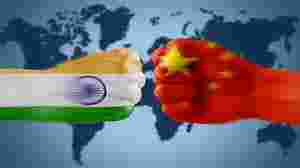
India and China relations are among the most complex and strategically significant bilateral relationships in the world today. As Asia’s two largest countries and fastest-growing major economies, India and China play a decisive role in shaping regional stability, global trade, and international politics. While the relationship is marked by ancient civilizational ties and expanding economic engagement, it is also characterized by unresolved border disputes, strategic competition, and diplomatic tensions.
This article explores the historical background, key dimensions, current challenges, and future prospects of India China relations, offering a comprehensive overview for readers seeking a deeper understanding of this critical geopolitical relationship.
Historical Background of India and China Relations
The history of India and China relations dates back more than 2,000 years. Ancient trade routes, including the Silk Road, facilitated cultural and commercial exchanges. Buddhism, which originated in India, spread to China through scholars and monks such as Faxian and Xuanzang, laying a strong foundation of civilizational contact.
Modern diplomatic relations were formally established in 1950, shortly after the founding of the People’s Republic of China. In the early years, India advocated for China’s recognition on the global stage, and the slogan “Hindi-Chini Bhai-Bhai” symbolized friendly ties. However, the 1962 Sino-Indian War over border disputes severely damaged trust and cast a long shadow over India China relations.
Border Disputes and Security Concerns
One of the most persistent challenges in India and China relations is the unresolved border issue along the Line of Actual Control (LAC). The disputed boundary spans approximately 3,488 kilometers across Ladakh, Himachal Pradesh, Uttarakhand, Sikkim, and Arunachal Pradesh.
Periodic standoffs and military tensions, including the Doklam crisis (2017) and the Galwan Valley clash (2020), have highlighted the fragility of peace along the border. These incidents resulted in casualties and significantly strained diplomatic and military ties.
Despite several rounds of military and diplomatic talks, a lasting solution remains elusive. Border stability continues to be a critical factor influencing the overall trajectory of India China relations.
Economic and Trade Relations Between India and China
Economic engagement is a crucial pillar of India and China relations. China is one of India’s largest trading partners, with bilateral trade exceeding $100 billion in recent years. India imports a wide range of goods from China, including electronics, machinery, pharmaceuticals, and raw materials.
However, the trade relationship is highly imbalanced, with India running a significant trade deficit. This imbalance has become a point of concern for Indian policymakers, leading to calls for greater market access in China and reduced dependence on Chinese imports.
Following border tensions, India introduced stricter scrutiny of Chinese investments and banned several Chinese mobile applications on security grounds. These actions reflect how geopolitical tensions increasingly affect economic aspects of India China relations.
Diplomatic Engagement and Multilateral Platforms
Despite bilateral challenges, India and China continue to engage diplomatically through various bilateral mechanisms and multilateral forums. Both countries are members of BRICS, the Shanghai Cooperation Organisation (SCO), G20, and the Asian Infrastructure Investment Bank (AIIB).
These platforms provide opportunities for dialogue and cooperation on global issues such as climate change, global economic governance, and development financing. At the same time, strategic competition, particularly in the Indo-Pacific region, shapes diplomatic interactions.
India’s growing engagement with the Quad (India, United States, Japan, and Australia) is closely watched by China and has become a sensitive aspect of India and China relations.
Strategic Competition and Regional Influence
Strategic rivalry is an increasingly prominent feature of India China relations. China’s Belt and Road Initiative (BRI), including projects in South Asia such as the China-Pakistan Economic Corridor (CPEC), has raised concerns in India regarding sovereignty and regional influence.
India, on the other hand, is strengthening partnerships with countries in Southeast Asia, the Indian Ocean region, and beyond through initiatives like “Act East” and “Security and Growth for All in the Region” (SAGAR).
This competition does not necessarily imply inevitable conflict, but it does indicate a shift from cooperation to cautious engagement in India and China relations.
Cultural and People-to-People Ties
While political and military issues dominate headlines, cultural and educational exchanges remain an important but underutilized aspect of India China relations. Student exchanges, tourism, yoga, traditional medicine, and academic cooperation have the potential to improve mutual understanding.
However, people-to-people ties have been affected by diplomatic tensions, visa restrictions, and reduced travel in recent years. Reviving these connections could play a constructive role in stabilizing the broader relationship.
The Future of India China Relations
The future of India and China relations will depend on how both countries manage competition while avoiding conflict. Confidence-building measures along the border, transparent communication, and respect for mutual sensitivities are essential for rebuilding trust.
Given their economic size and global influence, cooperation between India and China is important for addressing global challenges such as climate change, supply chain resilience, and economic recovery. At the same time, differences in political systems, strategic priorities, and regional ambitions suggest that competition will remain a defining feature of India China relations.
Conclusion
In conclusion, India and China relations are multifaceted, shaped by history, geography, economics, and strategic considerations. While border disputes and geopolitical rivalry pose significant challenges, sustained dialogue and pragmatic engagement offer pathways to stability.
As two rising global powers, India and China have both the responsibility and opportunity to manage their differences peacefully. The evolution of India China relations will not only influence Asia’s future but also have far-reaching implications for the global order.
 Romaian
 English
 Arabic
 French
 Spanish
 Portuguese
 Deutsch
 Turkish
 Dutch
Dutch
 Italiano
 Russian
 Portuguese (Brazil)
 Greek
Greek
