


Managing Subscriptions with Xero or NetSuite: Which One Integrates Better?
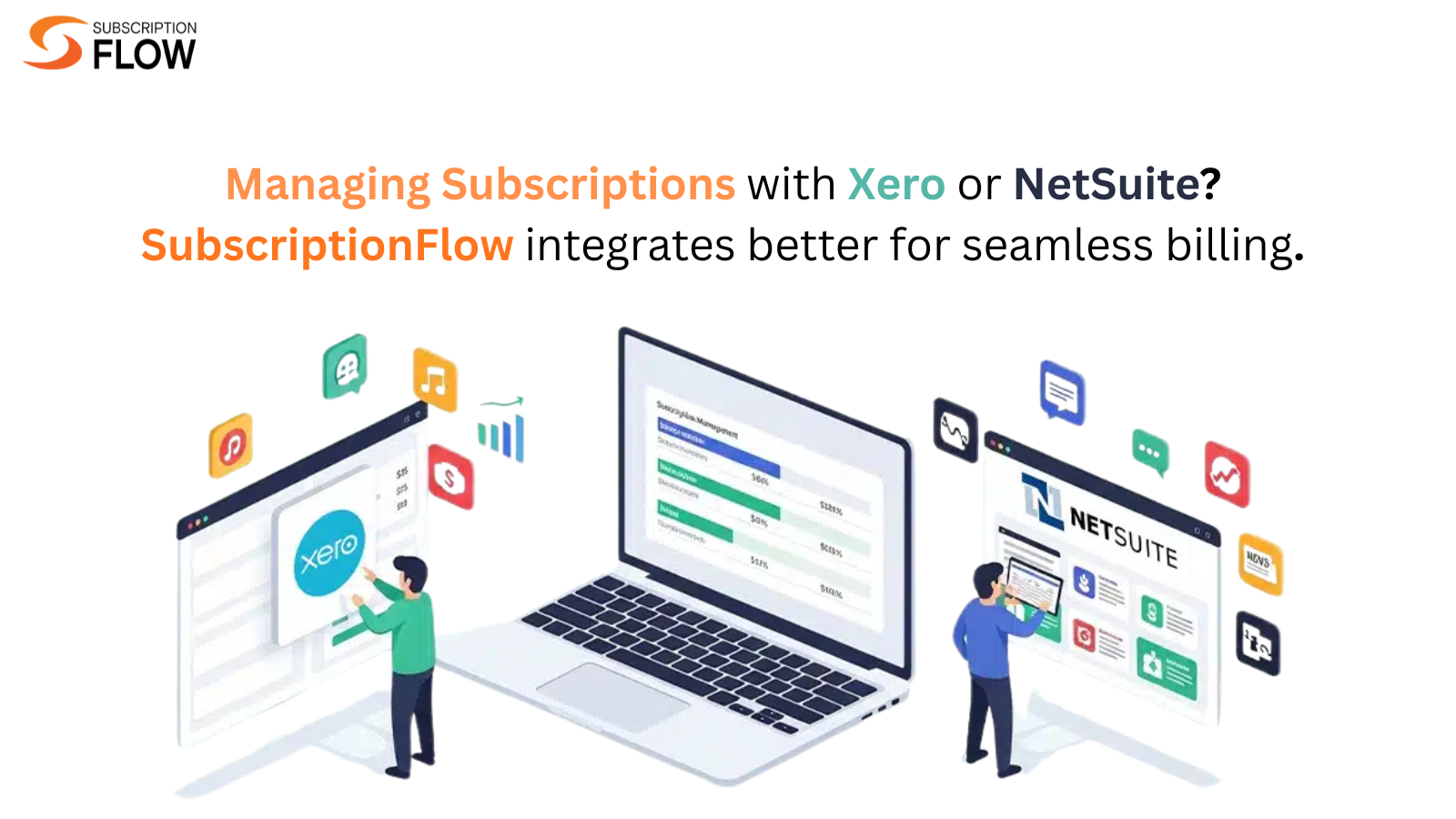
The subscription economy has expanded far beyond streaming platforms and SaaS. Today, industries ranging from e-learning and fintech to physical product delivery rely on recurring revenue models. However, as subscription models grow more complex—with usage-based billing, proration, add-ons, renewals, and multi-currency pricing—accounting integration becomes increasingly critical. Without seamless coordination between billing and accounting systems, businesses face invoicing errors, revenue leakage, compliance risks, and unreliable reporting. Choosing the right accounting platform is therefore a strategic decision, particularly when comparing Xero and Oracle NetSuite.
Why Accounting Integration Is Critical for Subscription Businesses
Subscription businesses generate continuous financial transactions that demand automation and precision. Automated invoice syncing ensures that recurring invoices, upgrades, and usage-based charges flow directly into the accounting system without manual intervention. Revenue recognition is another major factor. Under standards such as ASC 606 and IFRS 15, revenue must often be recognized over time rather than at the moment of payment, requiring structured deferred revenue tracking. Tax compliance adds further complexity, particularly for businesses operating across multiple regions and currencies. Finally, leadership teams depend on real-time financial dashboards that track MRR, ARR, churn, deferred revenue, and cash flow. Without tight integration, financial visibility becomes fragmented and unreliable.
How Xero Supports Subscription-Based Companies
Xero is a cloud-based accounting platform known for its simplicity and accessibility. Designed primarily for startups and small to mid-sized businesses, it provides automated bank reconciliation, recurring invoicing, multi-currency support, and a wide ecosystem of third-party integrations. For subscription businesses with relatively straightforward billing structures, Xero offers a lightweight and cost-effective solution. However, advanced revenue recognition capabilities typically require add-ons or middleware solutions to handle more complex subscription logic. Its developer-friendly API makes it ideal for companies seeking flexible, streamlined integrations without enterprise-level overhead.
How NetSuite Supports Subscription-Based Companies
Oracle NetSuite is a comprehensive ERP platform built for larger and more complex organizations. Beyond accounting, it integrates CRM, inventory management, order processing, and financial operations within a unified system. One of its strongest advantages for subscription businesses is its native revenue recognition engine, which supports sophisticated contract-based billing, deferred revenue scheduling, and compliance with global accounting standards. NetSuite also excels in multi-entity consolidation, advanced analytics, and enterprise-grade reporting. While highly powerful, its implementation often requires specialized expertise and a higher investment.
Integration Capabilities: Xero vs NetSuite
When comparing integration depth, Xero supports invoice syncing through APIs and third-party connectors, making it effective for simpler recurring billing models. NetSuite, by contrast, offers deeper native integration for contract-based billing, usage tracking, and complex pricing structures. In terms of reconciliation, Xero is particularly strong for SMB-level bank reconciliation automation, whereas NetSuite supports advanced workflows across subsidiaries and currencies. For subscription revenue tracking, NetSuite provides built-in automated revenue recognition, while Xero typically depends on middleware solutions for similar functionality. Ultimately, Xero aligns well with moderately complex startups and growing firms, whereas NetSuite is better suited to multinational enterprises with large billing volumes.
Common Integration Challenges
Regardless of platform choice, subscription businesses often encounter similar integration challenges. Poor system mapping can cause invoice duplication and customer data inconsistencies. Sync delays may disrupt reporting accuracy. Multi-currency transactions introduce exchange rate complexities. Additionally, sophisticated subscription structures—including tiered pricing, add-ons, downgrades, and usage-based billing—can strain basic accounting integrations. Selecting the right integration architecture is therefore as important as selecting the accounting software itself.
Where SubscriptionFlow Fits In
Subscription management platforms play a crucial intermediary role between billing systems and accounting software. Solutions like SubscriptionFlow bridge the gap between complex subscription logic and structured financial systems, ensuring automated invoice syncing, real-time customer updates, accurate payment reconciliation, and deferred revenue tracking. By streamlining billing workflows and pushing clean, structured financial data into accounting platforms such as Xero or NetSuite, businesses can eliminate data silos, reduce errors, and maintain financial accuracy without overburdening their accounting systems.
Which One Integrates Better?
The answer ultimately depends on business size and complexity. Xero is ideal for startups and SMBs seeking simplicity, affordability, and flexibility, particularly when subscription models are moderately complex and middleware solutions are acceptable. NetSuite is better suited for multinational organizations requiring built-in revenue recognition compliance, advanced contract management, and enterprise-level analytics. Both platforms offer strong accounting foundations, but the right choice aligns with your operational scale and subscription complexity.
Conclusion
Managing subscriptions effectively requires more than issuing recurring invoices. It demands synchronized financial systems capable of automation, compliance, and real-time visibility. Both Xero and NetSuite offer powerful integration capabilities, but their suitability varies by organizational needs. By pairing the right accounting platform with a robust subscription management solution, businesses can build a future-proof recurring revenue infrastructure that supports sustainable growth.
 Portuguese (Brazil)
 English
 Arabic
 French
 Spanish
 Portuguese
 Deutsch
 Turkish
 Dutch
Dutch
 Italiano
 Russian
 Romaian
 Greek
Greek
