


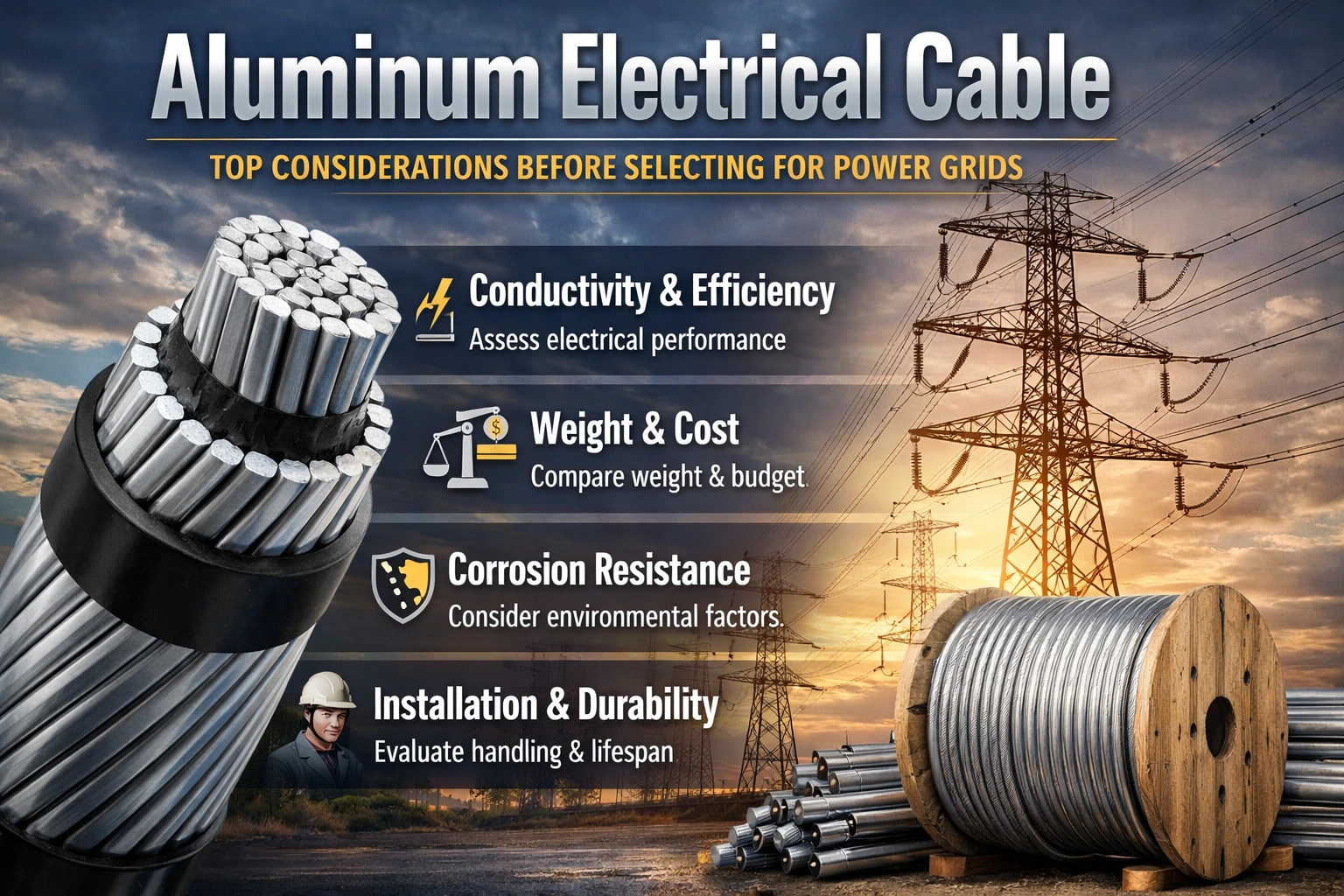
In modern electrical infrastructure, aluminum cable plays a critical role in delivering efficient, reliable, and cost-effective power transmission. From utility power grids to industrial distribution systems, aluminum conductors are widely used due to their excellent conductivity-to-weight ratio, corrosion resistance, and economic advantages.
For engineers, project managers, and procurement professionals involved in power transmission and distribution projects, choosing the right aluminum cable can significantly impact system efficiency, installation costs, and long-term reliability. As a global manufacturer of overhead conductors and power cables, HNBF Power provides high-performance aluminum cable solutions designed for utility networks, industrial projects, and large-scale electrical infrastructure.
This article explores the key characteristics, applications, advantages, and considerations when selecting aluminum cables for modern power systems.
Understanding Aluminum Cable in Power Transmission
An aluminum cable is an electrical conductor primarily made from aluminum strands used to carry electrical current. Compared with copper, aluminum offers a lighter and more economical alternative while maintaining sufficient conductivity for many power distribution applications.
In the power industry, aluminum cables are commonly used in:
-
Overhead transmission lines
-
Distribution networks
-
Underground power systems
-
Industrial electrical installations
-
Renewable energy infrastructure
Manufacturers like HNBF Power produce different types of aluminum-based conductors designed to meet diverse electrical and environmental requirements.
Types of Aluminum Cables Used in Power Networks
Power utilities and EPC contractors typically select aluminum cables based on their structural design and application environment. Some of the most commonly used types include:
1. AAC (All Aluminum Conductor)
AAC cables consist entirely of aluminum strands and are widely used in urban distribution networks and short-span overhead lines. They provide excellent conductivity but have lower tensile strength compared to reinforced conductors.
Key features:
-
High electrical conductivity
-
Lightweight structure
-
Suitable for short transmission spans
2. AAAC (All Aluminum Alloy Conductor)
AAAC cables use aluminum alloy instead of pure aluminum, offering improved mechanical strength and corrosion resistance.
Benefits include:
-
Higher strength compared to AAC
-
Excellent corrosion resistance
-
Suitable for coastal or industrial environments
AAAC is often used in medium-voltage distribution systems where durability and reliability are critical.
3. ACSR (Aluminum Conductor Steel Reinforced)
ACSR cables combine aluminum strands with a steel core, providing both conductivity and high mechanical strength. This design makes them ideal for long-distance overhead transmission lines.
Key advantages:
-
High tensile strength
-
Excellent sag performance
-
Reliable for long spans and heavy loads
ACSR conductors are widely used by power utilities worldwide for transmission and distribution networks.
4. ABC (Aerial Bundled Cable)
Aerial bundled cable is a modern alternative to traditional bare overhead conductors. It consists of insulated aluminum conductors bundled together for improved safety and reliability.
Common applications include:
-
Urban distribution systems
-
Residential power supply networks
-
Rural electrification projects
ABC cables reduce power theft, minimize electrical hazards, and improve system reliability.
5. Aluminum Power Cables for Underground Systems
In underground power distribution, aluminum cables are often used with insulation materials such as XLPE or PVC. These cables provide reliable electrical performance while maintaining cost efficiency for large-scale projects.
Typical uses include:
-
Underground power distribution
-
Industrial power systems
-
Commercial electrical installations
Key Advantages of Aluminum Cable
Aluminum cables have become a preferred choice for many power transmission and distribution projects due to several technical and economic advantages.
Lightweight and Easy Installation
Aluminum is significantly lighter than copper. This reduces transportation costs and simplifies installation, especially for overhead transmission lines and long-span networks.
Cost Efficiency for Large-Scale Projects
One of the biggest advantages of aluminum cable is its cost effectiveness. Aluminum is more affordable than copper, making it an ideal choice for large utility projects and grid expansion programs.
Corrosion Resistance
Aluminum naturally forms a protective oxide layer, which helps resist corrosion in harsh environmental conditions. This property makes aluminum conductors suitable for coastal, humid, and industrial areas.
High Conductivity for Power Transmission
Although copper has slightly higher conductivity, aluminum still offers excellent electrical performance. When properly designed, aluminum cables can deliver efficient power transmission with minimal energy loss.
Flexible for Multiple Applications
From overhead transmission lines to underground distribution systems, aluminum cables are adaptable to many types of power infrastructure.
Applications of Aluminum Cable in Modern Power Infrastructure
Aluminum cables are widely used across different sectors of the power industry.
Utility Transmission and Distribution
Power utilities rely heavily on aluminum conductors for overhead transmission and distribution networks, where long spans and high reliability are required.
Renewable Energy Projects
Solar farms and wind energy installations require durable and cost-efficient conductors. Aluminum cables provide the necessary performance for these large-scale renewable energy systems.
Industrial Power Systems
Factories, manufacturing plants, and heavy industrial facilities often use aluminum cables for internal power distribution and high-capacity electrical loads.
Urban Infrastructure and Construction
Modern cities use aluminum cables in underground electrical systems, commercial buildings, and infrastructure projects due to their economic and operational benefits.
Choosing the Right Aluminum Cable Supplier
Selecting a reliable cable manufacturer is critical for ensuring product quality, performance, and long-term reliability. Engineers and procurement professionals should consider several factors when choosing an aluminum cable supplier:
-
Compliance with international standards
-
Advanced manufacturing capabilities
-
Quality control and testing procedures
-
Custom engineering support
-
Global project supply experience
HNBF Power specializes in manufacturing high-quality aluminum conductors and power cables designed for demanding transmission and distribution applications. With advanced production technology and strict quality control, the company delivers reliable solutions for utilities, EPC contractors, and infrastructure developers worldwide.
Why Engineers Choose HNBF Power Aluminum Cable Solutions
HNBF Power offers a wide range of power transmission products, including:
-
AAC conductors
-
AAAC conductors
-
ACSR conductors
-
Aerial bundled cables (ABC)
-
LV power cables
-
Concentric cables
These products are engineered to meet the performance requirements of modern electrical grids, ensuring durability, safety, and long-term operational efficiency.
With a strong focus on technical innovation and global supply capability, HNBF Power supports infrastructure projects across power utilities, renewable energy installations, and industrial electrical systems.
FAQs About Aluminum Cable
1. Why is aluminum cable widely used in power transmission?
Aluminum cables are widely used because they provide a good balance of electrical conductivity, lightweight design, and cost efficiency, making them ideal for large power distribution networks.
2. Is aluminum cable better than copper cable?
Both materials have advantages. Copper offers higher conductivity, while aluminum is lighter and more cost-effective. For long transmission lines and large infrastructure projects, aluminum is often the preferred choice.
3. Where are aluminum cables commonly used?
Aluminum cables are commonly used in overhead transmission lines, distribution networks, underground power systems, industrial electrical installations, and renewable energy projects.
4. What is the difference between AAC and ACSR conductors?
AAC conductors consist entirely of aluminum and are suitable for short spans, while ACSR conductors include a steel core for higher strength, making them ideal for long-distance transmission lines.
5. How do I choose the right aluminum cable for a project?
The selection depends on factors such as voltage level, transmission distance, environmental conditions, mechanical strength requirements, and installation type.
Power Your Infrastructure with Reliable Aluminum Cable Solutions
As global energy demand continues to grow, choosing the right conductor technology is essential for building reliable and efficient electrical networks. Aluminum cable remains one of the most practical and widely used solutions for power transmission and distribution.
If you are planning a power infrastructure project and need high-quality aluminum conductors, HNBF Power offers customized cable solutions designed to meet the technical requirements of utilities, EPC contractors, and industrial customers worldwide.
Contact HNBF Power today to discuss your aluminum cable requirements and get expert support for your next power transmission or distribution project.

 English
 Arabic
 French
 Spanish
 Portuguese
 Deutsch
 Turkish
 Dutch
Dutch
 Russian
 Romaian
 Portuguese (Brazil)
 Greek
Greek
