


Mastering Resistance Spot Welding: Principles, Applications, and Best Practices
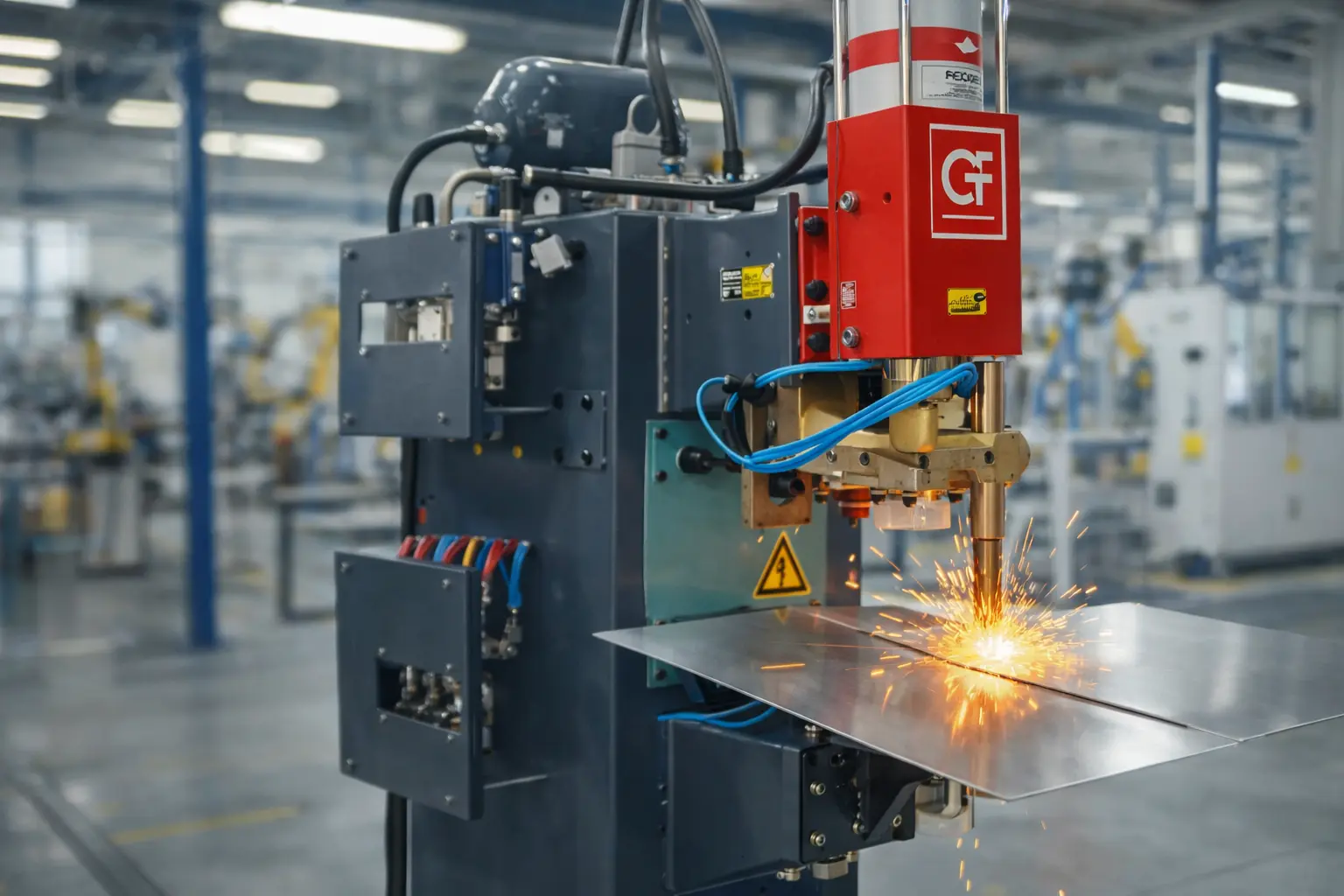
In modern manufacturing, achieving consistent, high-quality metal joints is essential for productivity, reliability, and cost efficiency. Resistance spot welding (RSW) remains a cornerstone technology in industries ranging from automotive and aerospace to appliance manufacturing. As a leading provider of industrial welding solutions, Heron Welder delivers advanced resistance spot welding machines, controllers, and automation systems designed for OEMs, production engineers, and factory decision-makers seeking precision and scalability.
What Is Resistance Spot Welding?
Resistance spot welding is a process of joining two or more metal sheets by applying pressure and passing an electric current through the contact point. The resistance of the materials generates heat, which melts the metal locally, forming a durable weld nugget upon cooling. Unlike traditional welding methods that require filler materials, RSW is fast, energy-efficient, and highly repeatable, making it ideal for high-volume manufacturing.
Key advantages of resistance spot welding:
-
Rapid cycle times suitable for mass production
-
Minimal material distortion
-
Clean process with no filler metal or flux required
-
Easy integration with automation and robotic systems
How Resistance Spot Welding Works
The resistance spot welding process involves three main components: electrodes, welding current, and pressure.
-
Electrodes – Copper electrodes clamp the metal sheets together while conducting the welding current. The shape and size of electrodes affect the weld nugget quality.
-
Welding Current – A high-amperage electric current passes through the contact point, generating localized heat due to electrical resistance.
-
Pressure – Mechanical pressure ensures proper metal-to-metal contact and controls nugget formation.
The process cycle generally includes: electrode placement, current application, cooling under pressure, and electrode release. Heron’s advanced controllers ensure precise timing, current control, and force regulation for repeatable, high-quality welds.
Common Applications of Resistance Spot Welding
Resistance spot welding is widely used across multiple industries where strong, efficient metal joining is critical. Typical applications include:
-
Automotive Manufacturing: Body panels, chassis components, and structural assemblies
-
Appliance Production: Sheet metal assembly in refrigerators, ovens, and HVAC units
-
Electrical Components: Battery tabs, connectors, and enclosures
-
Aerospace and Transportation: Lightweight aluminum and steel structures requiring precision welds
Heron’s RSW machines are designed for both steel and aluminum alloys, and they can be integrated into robotic production lines to optimize throughput while maintaining tight quality tolerances.
Resistance Spot Welding vs Other Welding Methods
While many welding processes exist, resistance spot welding offers distinct advantages over alternatives like MIG, TIG, or laser welding:
| Feature | Resistance Spot Welding | MIG/TIG Welding | Laser Welding |
|---|---|---|---|
| Speed | Very fast, ideal for high-volume | Slower, manual or semi-automatic | Fast, but high equipment cost |
| Automation | Easily automated | Moderate automation | High automation, precise but expensive |
| Material Waste | Minimal, no filler required | Filler material required | Minimal, no filler required |
| Distortion | Low | Moderate | Low, but sensitive to setup |
| Suitable Materials | Steel, aluminum alloys | Steel, aluminum, specialty metals | Steel, aluminum, titanium |
For factories focused on efficiency, throughput, and repeatable quality, RSW combined with automated handling is often the most cost-effective choice.
Best Practices for Resistance Spot Welding
To maximize quality and minimize rework, manufacturers should follow best practices:
-
Proper Electrode Maintenance: Regularly dress and replace electrodes to ensure consistent welds.
-
Optimal Current and Time Settings: Adjust welding parameters based on material type, thickness, and joint configuration. Heron’s MFDC and capacitor discharge RSW machines offer precise control over current pulses.
-
Sheet Preparation: Clean and properly align metal sheets to prevent weak welds and splatter.
-
Integration with Automation: Use robotic arms, conveyors, and vision systems to achieve consistent weld placement and cycle times.
-
Quality Monitoring: Employ real-time sensors and welding controllers to monitor force, current, and resistance for predictive maintenance and process optimization.
Heron’s advanced resistance spot welding systems are designed with these best practices in mind, providing engineers with intuitive controls, process monitoring, and automated data logging.
Heron Welder: Your Partner in Resistance Spot Welding
With decades of experience in industrial welding, Heron Welder offers a full portfolio of resistance spot welding machines, controllers, and automated production lines. Our solutions are tailored to meet the exact requirements of your factory, whether you need manual, semi-automatic, or fully robotic RSW systems. By combining high precision, repeatability, and durability, Heron empowers manufacturers to enhance productivity and ensure product quality at scale.
FAQs About Resistance Spot Welding
1. Can resistance spot welding be used on aluminum?
Yes. Heron’s MFDC and capacitor discharge RSW machines are optimized for aluminum and its alloys, providing precise heat control to avoid burn-through or weak welds.
2. What thickness of metal sheets can be welded using RSW?
Typical applications range from 0.5 mm to 6 mm for steel and up to 3 mm for aluminum. Machines can be customized for thicker materials if required.
3. How is electrode life extended?
Electrode maintenance, proper current settings, and periodic dressing ensure consistent performance and longevity.
4. Is resistance spot welding suitable for high-volume production?
Absolutely. RSW is ideal for high-speed, repetitive manufacturing processes and integrates seamlessly with automated and robotic lines.
5. What industries benefit most from RSW?
Automotive, appliance manufacturing, electrical assembly, and aerospace industries see the greatest advantages in speed, quality, and automation potential.
Take the Next Step with Heron Welder
Optimizing your manufacturing process starts with reliable, high-performance welding solutions. Heron Welder delivers industry-leading resistance spot welding machines, automation systems, and technical support tailored to your factory’s needs.
Request a quote today or consult with our experts to design a customized welding and automation solution that maximizes productivity, quality, and ROI.
 English
 Arabic
 French
 Spanish
 Portuguese
 Deutsch
 Turkish
 Dutch
Dutch
 Italiano
 Russian
 Romaian
 Portuguese (Brazil)
 Greek
Greek
