


The Hidden Danger in Your Backyard That Sent My Neighbor to the Hospital
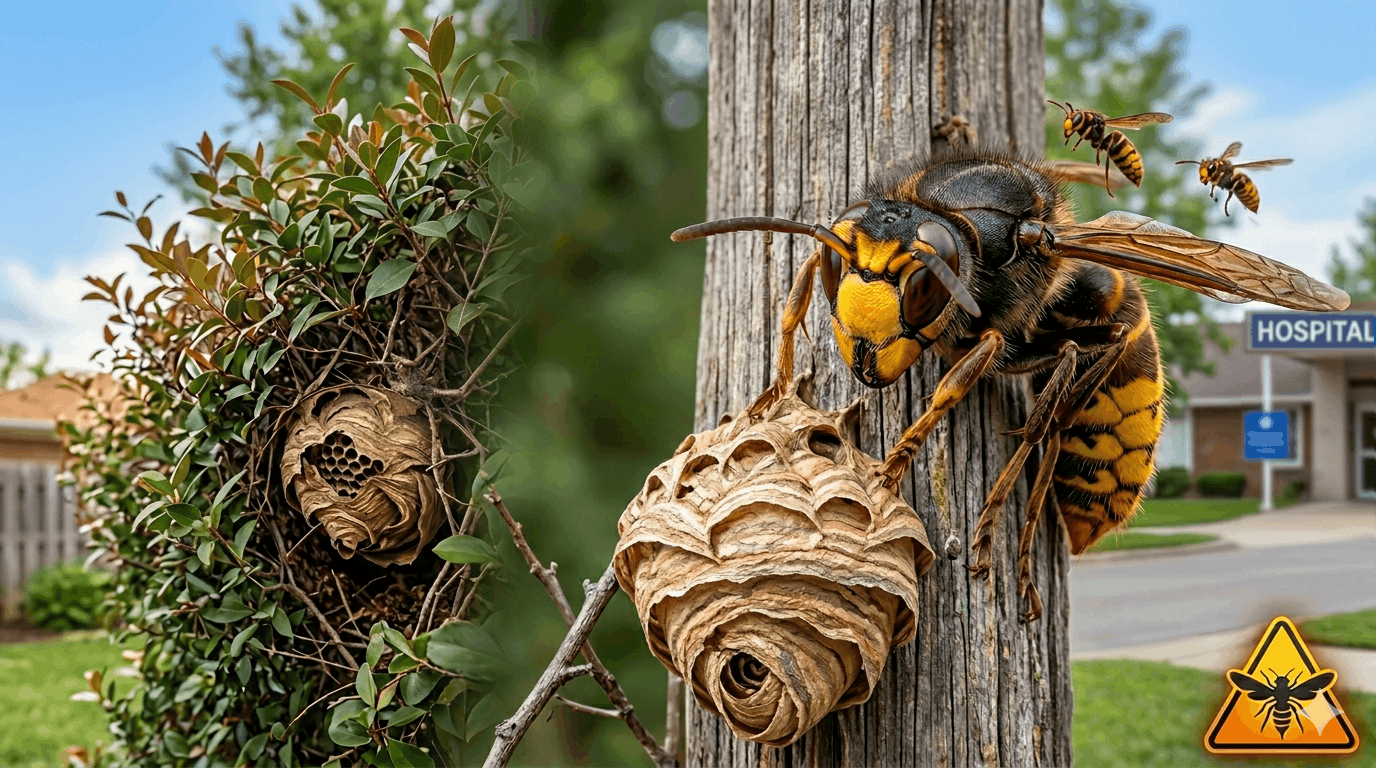
A true story. A serious warning. Practical advice that could save your life.
Originally published on Medium: Read the full story here
It Started as a Normal Summer Day
My neighbor was just doing some yard work — trimming a hedge, cleaning up the garden.
He had no idea that hidden inside that hedge was a hornet nest the size of a basketball, housing hundreds of aggressive insects.
Within seconds of disturbing it, he was surrounded. Hornets attacked from every direction, stinging him repeatedly. His wife rushed him to hospital that same afternoon.
The scariest part? He never saw it coming. The nest had been growing silently for weeks — completely out of sight, completely out of mind.
This story is a wake-up call. If it could happen to him, it can happen to anyone. Here is everything you need to know to protect yourself and your family.
What Are Hornets — And Why Are They So Dangerous?
Hornets are a type of social wasp belonging to the genus Vespa. They are significantly larger and more aggressive than the average wasp, and they defend their nests with remarkable ferocity.
Unlike honeybees, which sting once and die, hornets have smooth stingers that allow them to sting a target multiple times in rapid succession. A single hornet can sting you again and again without losing its stinger.
When a hornet feels threatened, it releases an alarm pheromone that signals the rest of the colony to attack. This means disturbing a nest does not just provoke one or two insects — it can trigger a swarm attack from hundreds of defenders all at once.
Their venom is potent. For people with allergies, even a single sting can cause anaphylactic shock — a life-threatening emergency that requires immediate medical attention.
How Big Can a Hornet Nest Really Get?
This is where many people are genuinely shocked.
A hornet nest begins in early spring, started by a single queen emerging from hibernation. By late summer, that same nest can hold anywhere from 400 to 700 workers — all capable of stinging.
Nests are built from chewed wood fibres mixed with saliva, giving them a distinctive layered, papery appearance. They can grow as large as a basketball or bigger by the end of the season.
Common nesting locations include:
• Tree branches and dense garden shrubs
• Under roof eaves, soffits, and overhangs
• Inside attics, wall voids, and garden sheds
• In underground rodent burrows
• Behind exterior cladding and siding
Many of these spots are ones we interact with every day — which is exactly what makes them so dangerous.
Warning Signs You May Have a Hornet Nest Nearby
Early detection is everything. Here are the key signs to watch for:
Increased hornet activity: If hornets keep flying back to the same area of your yard, they are likely returning to a nest.
A papery, layered structure: Look in dense shrubs, under eaves, around outdoor furniture, and in shed corners.
Hornets entering a gap or crack: A small opening in your siding, roofline, or ground can be an entry point to a hidden nest.
Chewed or damaged wood: Hornets strip softwood fibres to build their nests — look for small patches of scraped or weathered wood.
Unusual buzzing sounds: A low, steady hum near walls, eaves, or hedges can indicate a large colony nearby.
If you notice any of these signs, do not go looking for the nest yourself. Step back, keep children and pets indoors, and call a professional.
Why DIY Removal Is So Risky
Every year, homeowners end up in the emergency room after attempting to remove hornet nests on their own. The most common mistakes include:
• Hitting the nest with a stick, bat, or garden tool
• Spraying the nest with a garden hose
• Using store-bought sprays without proper protective gear
• Approaching the nest during daylight when hornets are most active
• Blocking the nest entrance, which traps and enrages the colony
Any of these actions can trigger a mass attack within seconds. Hundreds of hornets can emerge from a disturbed nest almost instantly — and they will pursue the threat aggressively.
Even store-bought hornet sprays carry serious risks if used incorrectly. Without the right protective suit, face covering, and experience, DIY removal is simply not worth the risk.
What a Professional Does Differently
Licensed pest control technicians handle hornet nests safely because they have the right training, equipment, and products.
A professional will first inspect your property thoroughly to locate all active nests — including any you may not have found yourself. They will identify the species, assess the size of the colony, and plan the safest removal approach.
Treatment is typically applied at dawn or dusk, when hornets are least active and most concentrated inside the nest. Insecticide is applied directly at the nest entrance for maximum penetration. After the colony is eliminated, the nest is safely removed and disposed of.
Many professionals also apply residual treatments to prevent new nests from forming in the same location the following season — because hornets and wasps are known to return to previous nesting sites year after year.
How to Protect Your Property This Season
Prevention is far easier — and safer — than dealing with an established nest. Here are practical steps you can take right now:
• Walk your yard every few weeks during spring and summer, checking eaves, shrubs, sheds, and ground level
• Seal gaps and cracks in your home's exterior walls, soffits, and roofline
• Keep garbage bins sealed tightly — open bins attract hornets looking for food
• Trim overgrown hedges and shrubs regularly to remove potential nesting sites
• Spray peppermint oil around eaves and potential nesting areas — hornets strongly dislike the scent
• Hang a decoy nest in early spring to deter queens from settling on your property
• If you had a nest last year, book a preventive treatment before the season begins
A little effort in spring can prevent a serious emergency later in the summer.
What to Do If Someone Gets Stung
If a sting happens, stay calm and act quickly.
Move away from the area immediately — do not swat at hornets, as this triggers further attacks. Get indoors or into a vehicle as fast as possible.
For a normal reaction, clean the sting area with soap and water, apply a cold pack to reduce swelling, and take an antihistamine if needed.
Call emergency services immediately if the person shows any of these symptoms:
• Difficulty breathing or swallowing
• Swelling of the face, lips, throat, or tongue
• Rapid or irregular heartbeat
• Severe hives or a spreading rash across the body
• Dizziness, confusion, or loss of consciousness
These are signs of anaphylaxis — a severe allergic reaction that is potentially fatal without immediate medical treatment. Do not wait for symptoms to worsen. Call for help at once.
The Bottom Line: Don't Wait Until It's an Emergency
My neighbor recovered. But his experience is a powerful reminder of just how quickly a hidden hornet nest can become a life-threatening situation.
You do not need to be afraid of your own backyard. You just need to stay informed, stay alert, and know when to call for professional help.
Regular inspections, smart prevention habits, and the support of a trusted pest control professional are all it takes to keep your outdoor space safe for the whole family — all season long.
For more real pest control stories, expert tips, and practical guides, visit our Medium blog: 4K Pest Control on Medium
Frequently Asked Questions (FAQ)
Hornet Nests, Stings & Safety
❓ How do I know if I have a hornet nest on my property?
→ Watch for hornets repeatedly flying to the same area, a papery layered structure in shrubs or under eaves, hornets entering gaps in your exterior walls, or an unusual buzzing sound near hedges or siding. If you spot any of these signs, do not investigate further — contact a pest control professional.
❓ Can I remove a hornet nest myself?
→ It is strongly advised against. Disturbing a nest triggers a mass attack from hundreds of hornets, each capable of stinging multiple times. Even with store-bought sprays, the risk of serious injury is very high without professional protective gear and training. Always call a licensed pest control technician for safe removal.
❓ What time of year are hornet nests most dangerous?
→ Nests grow throughout spring and summer. By late summer a single nest can contain 400 to 700 workers. Early detection in spring — when nests are small — is the safest time to address the problem before the colony reaches full size.
❓ What should I do immediately if I am stung multiple times?
→ Move away from the area calmly and quickly. For normal reactions, clean the area, apply cold, and take an antihistamine. If the person shows signs of anaphylaxis — difficulty breathing, facial or throat swelling, dizziness, or loss of consciousness — call emergency services immediately. Do not wait for symptoms to worsen.
❓ Are hornets the same as wasps or bees?
→ Hornets are a type of wasp, not a bee. Unlike bees, hornets can sting repeatedly without dying. The European hornet is the only true hornet species in North America. Bald-faced hornets, though also common, are technically a type of yellowjacket wasp. Both are aggressive nest defenders.
❓ How can I prevent hornets from nesting in my yard?
→ Seal exterior cracks and gaps, keep garbage bins tightly closed, trim hedges and shrubs regularly, and inspect your yard every few weeks during warm months. Peppermint oil sprayed around eaves and a decoy nest hung in early spring can also deter queens from establishing colonies nearby.
❓ Is a hornet sting dangerous even if I am not allergic?
→ Yes. Even without a known allergy, multiple stings can cause toxic venom buildup in the body with serious health consequences. A mass attack involving dozens or hundreds of stings is a medical emergency for anyone, regardless of allergy status. Always seek medical advice after a significant stinging incident.
❓ How much does professional hornet nest removal cost?
→ Costs vary depending on nest size, location, and the pest control company. On average, professional removal ranges from $100 to $1,300. Many companies offer free inspections. The cost of professional removal is always far less than the cost of a hospital visit — or worse.
4K Pest Control | Professional Pest Management Services
Read more at: medium.com/@4kpestcontrol.ca
 Russian
 English
 Arabic
 French
 Spanish
 Portuguese
 Deutsch
 Turkish
 Dutch
Dutch
 Italiano
 Romaian
 Portuguese (Brazil)
 Greek
Greek
