In a hospital environment, clear communication can make a significant difference in patient comfort and operational efficiency. Hospital signage plays a vital role in helping patients, visitors, and medical staff navigate complex healthcare facilities with ease. From emergency exits and directional signs to department identifiers and safety instructions, well-designed healthcare signage improves accessibility, reduces confusion, and enhances the overall patient experience.
Modern hospitals require signage systems that are visually clear, easy to understand, durable, and compliant with healthcare standards. Effective hospital signs not only guide people but also reinforce safety protocols and create a professional healthcare environment.
Why Hospital Signage Matters
Hospitals are often stressful environments where patients and visitors may already feel anxious or overwhelmed. Proper signage helps reduce stress by making navigation simpler and faster.
Benefits of hospital signage include:
- Faster wayfinding for patients and visitors
- Improved emergency response and evacuation guidance
- Better workflow efficiency for hospital staff
- Enhanced patient safety
- Reduced confusion and crowding
- Support for accessibility and inclusivity
- Stronger hospital branding and professionalism
Studies and healthcare guidelines emphasize that clear wayfinding systems can significantly improve patient satisfaction and reduce delays inside healthcare facilities.
Types of Signage for Hospitals
Directional Signage
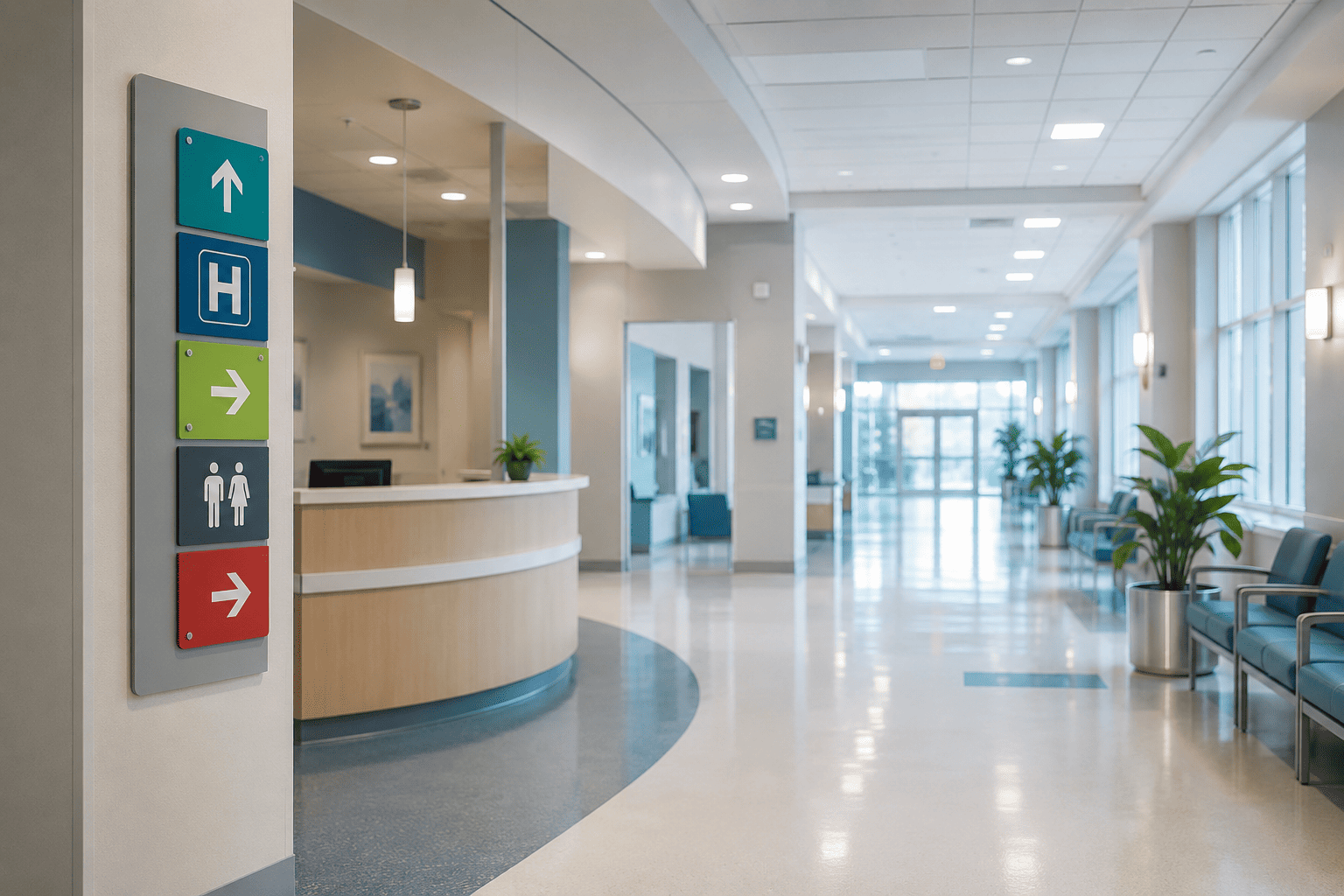
Directional or wayfinding signs help visitors locate departments, wards, elevators, restrooms, pharmacies, ICUs, OPDs, and emergency rooms. These signs are typically installed in corridors, entrances, parking areas, and lobbies.
Effective directional signs should:
- Use large readable fonts
- Include arrows and symbols
- Feature high color contrast
- Be visible from long distances
Department Identification Signs
Department signage identifies different sections of the hospital, including:
- Emergency rooms
- Radiology
- ICU
- Operation theatres
- Pediatrics
- Laboratories
- Reception areas
These signs allow patients and visitors to quickly recognize destinations without needing assistance.
Safety and Emergency Signage
Safety signs are critical in healthcare environments. Hospitals require clear signage for:
- Emergency exits
- Fire safety equipment
- Hazardous material zones
- Radiation warning areas
- Restricted access zones
- Infection control instructions
Emergency signs should remain visible even during power outages and should comply with fire safety regulations.
ADA and Accessibility Signage
Healthcare facilities must ensure accessibility for everyone, including people with disabilities. ADA-compliant signage often includes:
- Braille text
- Raised lettering
- High-contrast colors
- Non-glare finishes
- Easy-to-read typography
Accessible signage helps visually impaired patients navigate independently and safely. Healthcare facility guidelines also recommend multilingual signage in hospitals serving diverse populations.
Digital Signage in Hospitals
Many hospitals are now adopting digital signage solutions to improve communication and patient engagement. Digital screens can display:
- Appointment schedules
- Queue management systems
- Health awareness information
- Emergency announcements
- Visitor instructions
- Real-time updates
Digital hospital signage improves operational efficiency and allows hospitals to update information instantly without replacing physical signs.
Best Practices for Effective Hospital Signage
Use Clear and Simple Language
Medical terminology can confuse visitors. Signs should use plain language that is easy to understand.
Maintain Consistent Design
Consistency in fonts, colors, icons, and layouts helps visitors quickly recognize information throughout the facility.
Prioritize Visibility
Hospital signs should be installed at eye level and positioned where people naturally look for guidance. Good lighting and high contrast improve readability.
Include Universal Symbols
International healthcare symbols improve communication, especially for non-native speakers and elderly visitors.
Choose Durable Materials
Hospital signage must withstand continuous cleaning and sanitization. Durable, non-porous materials are ideal for healthcare environments.
Plan for Future Updates
Healthcare facilities often expand or reorganize departments. Modular signage systems make updates easier and more cost-effective.
Importance of Wayfinding in Large Hospitals
Large healthcare facilities can be difficult to navigate, especially for first-time visitors. A comprehensive wayfinding system includes:
- Exterior directional signs
- Parking guidance
- Lobby directories
- Floor maps
- Corridor signs
- Department markers
An organized wayfinding strategy minimizes frustration and reduces dependency on hospital staff for directions.
The Role of Signage in Patient Safety
Hospital signage directly contributes to patient safety by:
- Guiding emergency evacuations
- Preventing entry into hazardous areas
- Supporting infection control measures
- Reducing navigation delays during emergencies
- Improving staff communication
Healthcare studies highlight the importance of proper signage in creating safer and more efficient medical environments.
Conclusion
Signage for hospitals is much more than simple direction boards. It is an essential communication system that improves patient experience, enhances operational efficiency, and supports healthcare safety standards. From wayfinding and accessibility to emergency preparedness and digital communication, hospital signage plays a crucial role in modern healthcare facilities.
Investing in high-quality healthcare signage helps hospitals create organized, accessible, and patient-friendly environments where visitors and staff can move confidently and safely.



 Deutsch
 English
 Arabic
 French
 Spanish
 Portuguese
 Turkish
 Dutch
Dutch
 Italiano
 Russian
 Romaian
 Portuguese (Brazil)
 Greek
Greek
