


How Do RWA Tokenization Development Systems Support Secondary Markets
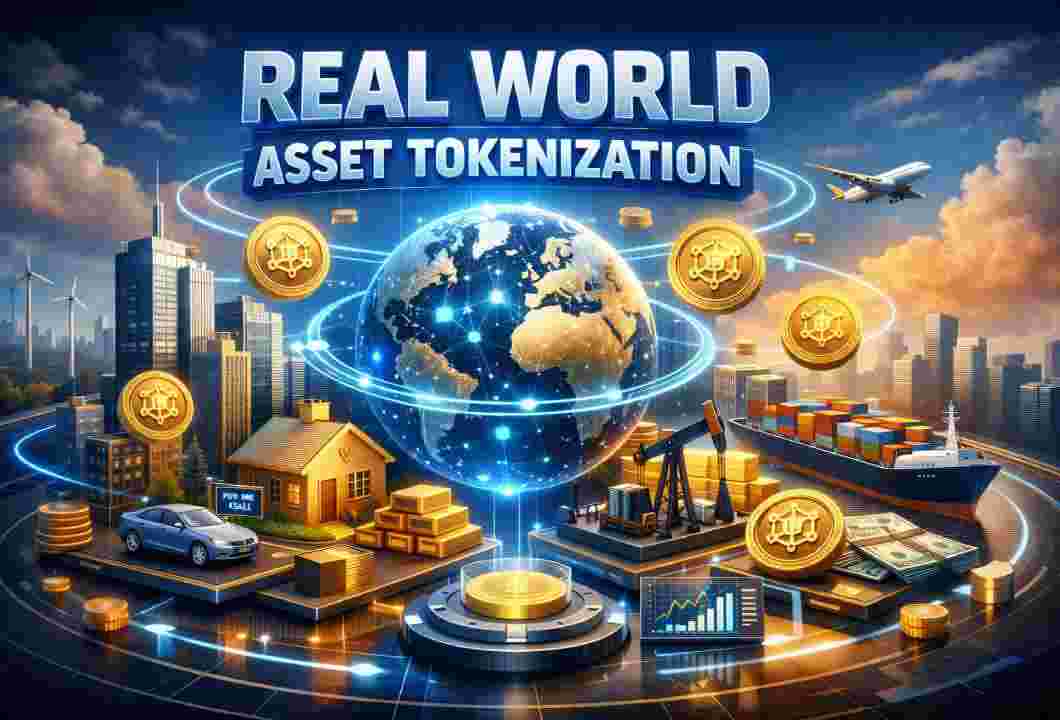
Secondary markets have always played a decisive role in the efficiency of financial ecosystems. They determine whether assets remain locked in long holding cycles or become liquid, tradable instruments that can be exchanged freely among participants. In traditional finance, secondary markets exist for equities, bonds, and commodities, but real-world assets such as real estate, private credit, infrastructure, and art have historically remained illiquid due to structural and operational constraints.
Real World Asset (RWA) tokenization development systems are changing this structure by introducing blockchain-based infrastructure that enables fractional ownership, programmable compliance, and peer-to-peer transferability of traditionally illiquid assets. A major outcome of this transformation is the emergence of more efficient, transparent, and accessible secondary markets.
This article explores how RWA tokenization development systems support secondary markets, the mechanisms involved, and the broader implications for global asset liquidity.
Understanding Secondary Markets in the Context of RWAs
A secondary market is where previously issued assets are bought and sold between investors, rather than directly from the issuer. In traditional systems, secondary markets for real-world assets are often fragmented, slow, and dependent on intermediaries such as brokers, banks, and clearinghouses.
For example:
- Selling real estate requires listing agents, legal verification, and settlement timelines that may span months.
- Private equity shares are often locked for years due to contractual restrictions.
- Infrastructure or commodity-linked investments have limited exit pathways.
RWA tokenization development systems restructure this model by converting ownership rights into digital tokens recorded on a blockchain. These tokens can be transferred instantly, subject to programmable compliance rules, thereby enabling continuous and accessible secondary market activity.
Core Architecture of RWA Tokenization Development Systems
To understand how secondary markets are supported, it is important to examine the core components of tokenization systems. These systems are typically built using blockchain infrastructure combined with financial and compliance modules.
1. Asset Digitization Layer
This layer converts physical or off-chain assets into digital representations. Legal ownership rights are mapped to tokens, ensuring each token reflects a verifiable claim on the underlying asset.
2. Smart Contract Framework
Smart contracts automate ownership rules, dividend distribution, transfer conditions, and compliance checks. They ensure that secondary transactions adhere to predefined regulations without manual intervention.
3. Identity and Compliance Layer
Know Your Customer (KYC) and Anti-Money Laundering (AML) systems are embedded into token transfer logic. This ensures that only eligible participants can engage in secondary trading activities.
4. Liquidity and Market Interface
Tokenization systems often integrate with decentralized or permissioned marketplaces where tokens can be listed, bought, and sold. These interfaces act as digital secondary markets for tokenized assets.
5. Settlement and Custody Infrastructure
Blockchain-based settlement reduces the need for intermediaries. Transactions are executed and recorded in near real-time, while custody systems manage secure storage of digital assets.
How Tokenization Systems Enable Secondary Market Liquidity
1. Fractional Ownership Expands the Buyer Base
One of the most significant barriers to secondary market liquidity in traditional finance is high asset entry cost. Real estate, infrastructure projects, or private equity stakes require substantial capital commitments. Tokenization solves this by dividing assets into smaller, tradable units. Each token represents a fraction of ownership, allowing a wider range of investors to participate.
As the number of potential buyers increases, secondary market liquidity naturally improves because:
- More participants can enter and exit positions
- Price discovery becomes more dynamic
- Asset concentration risk is reduced
2. 24/7 Global Market Access
Traditional secondary markets operate within fixed trading hours and jurisdictional boundaries. RWA tokenization systems eliminate these constraints by operating on decentralized blockchain networks.
This allows:
- Continuous trading across time zones
- Global investor participation
- Reduced dependency on regional intermediaries
A tokenized real estate asset in one country can be traded by investors in another within seconds, significantly expanding market reach and liquidity depth.
3. Instant Settlement Reduces Transaction Friction
In conventional secondary markets, settlement can take days due to clearing processes, paperwork, and intermediary verification. RWA tokenization systems use blockchain-based settlement mechanisms where ownership transfer occurs instantly once conditions are met.
This reduces:
- Counterparty risk
- Administrative delays
- Operational costs
Faster settlement cycles encourage higher trading frequency, which strengthens secondary market activity.
4. Programmable Compliance Enables Secure Trading
Regulatory compliance is one of the biggest constraints in secondary markets for real-world assets. Tokens embedded with compliance logic ensure that every transfer automatically adheres to regulatory requirements.
Examples include:
- Restricting transfers to accredited investors
- Enforcing jurisdiction-based trading rules
- Applying holding period limitations
This programmable compliance reduces legal uncertainty and allows secondary markets to operate within regulated frameworks without slowing down transaction flow.
5. Increased Transparency Improves Market Confidence
Secondary markets depend heavily on trust. Investors need visibility into asset ownership, transaction history, and valuation mechanisms.
Blockchain-based tokenization systems provide:
- Immutable transaction records
- Real-time ownership tracking
- Transparent asset provenance
This transparency reduces information asymmetry and enhances investor confidence, which in turn increases trading activity in secondary markets.
6. Automated Dividend and Yield Distribution
Secondary market participants often rely on yield or income generated by the underlying asset. Tokenization systems automate this distribution using smart contracts.
For example:
- Rental income from real estate is distributed proportionally to token holders
- Infrastructure revenue is split based on ownership percentages
- Interest from tokenized debt instruments is paid automatically
This automation ensures that secondary market investors can seamlessly enter and exit positions without disrupting income flows, making assets more attractive to trade.
Role of Liquidity Pools and Decentralized Exchanges
In advanced tokenization ecosystems, liquidity is further enhanced through decentralized finance (DeFi) mechanisms.
Liquidity Pools
Tokenized assets can be paired with stablecoins or other tokens in liquidity pools. This enables continuous buying and selling without requiring direct counterparties.
Automated Market Makers (AMMs)
Instead of relying on order books, AMMs use algorithmic pricing models to facilitate trades. This ensures that secondary markets remain active even when direct buyers or sellers are not immediately available. These mechanisms significantly reduce illiquidity risk for tokenized real-world assets.
Institutional Impact on Secondary Markets
Institutional investors are increasingly exploring tokenized assets due to improved liquidity structures. RWA tokenization systems provide features that align with institutional requirements:
- Auditable transaction history
- Regulatory compliance automation
- Secure custody solutions
- High-frequency trading capability for fractional assets
As institutions participate in tokenized secondary markets, liquidity depth increases further, creating more stable pricing environments.
Risk Considerations in Tokenized Secondary Markets
While RWA tokenization systems improve liquidity, they also introduce new risk dimensions that must be addressed.
1. Smart Contract Vulnerabilities
If poorly designed, smart contracts may be exposed to exploits, potentially affecting secondary trading integrity.
2. Regulatory Fragmentation
Different jurisdictions may classify tokenized assets differently, impacting cross-border secondary trading.
3. Market Volatility
Increased accessibility can lead to higher speculative trading activity, influencing price stability.
4. Oracle Dependency
Accurate asset valuation often depends on external data feeds (oracles), which can introduce risks if compromised.
Future Evolution of Secondary Markets Through Tokenization
The evolution of RWA tokenization development systems suggests a shift toward fully digital secondary markets where traditional boundaries between asset classes begin to blur. Several developments are likely to shape the future:
Integration with Real-Time Asset Valuation
AI-driven valuation models will provide continuous pricing updates for tokenized assets, enhancing secondary market accuracy.
Cross-Asset Trading Ecosystems
Investors may trade tokenized real estate, bonds, and commodities within unified marketplaces.
Institutional-Grade DeFi Infrastructure
Hybrid systems combining decentralized finance with regulated custody solutions will support large-scale institutional participation.
Global Regulatory Standardization
As adoption increases, regulatory frameworks are expected to evolve toward standardized global tokenization guidelines, improving secondary market interoperability.
Conclusion
RWA tokenization development systems are fundamentally reshaping how secondary markets function for real-world assets. By introducing fractional ownership, blockchain-based settlement, programmable compliance, and global accessibility, these systems remove long-standing barriers to liquidity. Secondary markets that were once slow, fragmented, and geographically restricted are evolving into continuous, transparent, and highly accessible digital ecosystems. While challenges such as regulation and security remain, the structural advantages of tokenization continue to drive adoption across asset classes. As these systems mature, secondary markets for real-world assets are expected to become more efficient than many traditional financial markets, marking a significant transformation in global asset trading infrastructure.
 Italiano
 English
 Arabic
 French
 Spanish
 Portuguese
 Deutsch
 Turkish
 Dutch
Dutch
 Russian
 Romaian
 Portuguese (Brazil)
 Greek
Greek
