


Complete Guide to Geomembrane Testing Lab Services
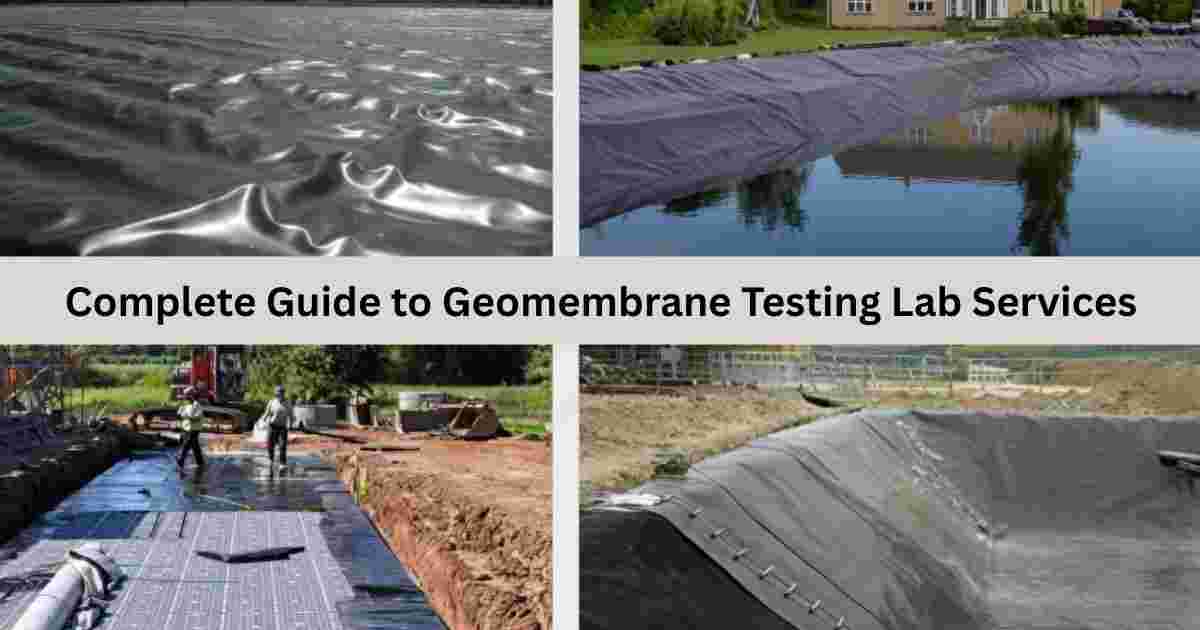
Geomembranes are widely used in infrastructure, environmental protection, mining, water containment, landfill engineering, and industrial applications. Proper geomembrane Testing helps maintain long-term durability and project performance. Their performance directly affects project safety, durability, and environmental protection.
To maintain quality and long-term reliability, professional laboratory analysis is essential. Proper evaluation helps manufacturers, contractors, and consultants verify that geomembrane materials meet required technical standards and project specifications.
This guide explains major geomembrane evaluation methods, ASTM standards, quality parameters, and the importance of choosing a NABL accredited laboratory.
What is Geomembrane Analysis?
Geomembrane analysis is the process of evaluating the physical, mechanical, hydraulic, and chemical properties of geomembrane sheets used in engineering and containment projects.
The evaluation process helps determine whether the material can resist stress, puncture, UV exposure, chemical attack, and environmental conditions.
Geomembranes are commonly used in:
- Landfills
- Water reservoirs
- Canal lining
- Mining projects
- Wastewater treatment plants
- Agriculture ponds
- Industrial containment systems
Professional laboratory evaluation helps ensure installation reliability and long-term performance. A certified geomembrane Testing process also supports quality compliance for critical projects.
Importance of Professional Laboratory Services
Low-quality geomembrane materials can lead to leakage, environmental contamination, structural damage, and expensive maintenance.
A certified laboratory helps improve quality assurance and supports compliance with national and international standards. Professional geomembrane Testing reduces the risk of installation failure and leakage.
Benefits of Professional Evaluation
- Improved material durability
- Verification of ASTM compliance
- Better weld performance
- Reduced leakage risk
- Enhanced environmental protection
- Long-term project reliability
- Better quality control
Accurate analysis also helps contractors and project consultants avoid performance failures during installation and operation.
Geomembrane Sheet Evaluation
Geomembrane sheet evaluation is performed before installation to verify physical and mechanical properties.
Common Parameters Evaluated
- Thickness
- Density
- Dimensional stability
- Carbon black content
- Tear resistance
These checks are important for product quality control and specification approval in geomembrane Testing procedures.
Tensile Strength Evaluation
Tensile strength analysis measures the ability of geomembrane sheets to resist pulling force without failure.
This process helps determine:
- Yield strength
- Break strength
- Elongation properties
- Material flexibility
High tensile strength is essential for projects exposed to stress and movement in geomembrane applications.
Puncture Resistance Analysis
Puncture resistance analysis determines how effectively geomembrane liners can withstand sharp objects, stones, and external pressure.
This evaluation is especially important for:
- Landfill liners
- Mining applications
- Industrial containment systems
- Water retention projects
Benefits of Puncture Resistance Evaluation
- Improved installation safety
- Better field performance
- Reduced leakage possibilities
- Increased durability
High puncture resistance improves long-term performance under rough site conditions and supports reliable geomembrane Testing standards.
Seam and Weld Quality Evaluation
Proper seam joining is critical for geomembrane installation. Seam quality analysis helps ensure leak-proof performance and structural reliability.
Common Seam Evaluation Methods
- Shear strength analysis
- Peel adhesion evaluation
- Air pressure checks
- Vacuum box inspection
Accurate weld verification reduces seam failure risk and improves overall geomembrane liner integrity.
HDPE Liner Quality Analysis
HDPE liners are widely used in environmental and infrastructure projects because of their durability and chemical resistance.
Important Parameters Evaluated
- Oxidative induction time
- UV resistance
- Stress crack resistance
- Chemical resistance
- Hydrostatic performance
Professional laboratories ensure HDPE geomembrane liners can perform effectively in demanding environmental conditions.
ASTM Standards for Geomembrane Evaluation
Certified laboratories follow internationally accepted ASTM procedures for accurate quality verification.
Read More Information: https://stellartesthouse.com/complete-guide-to-geomembrane-testing-lab-services/
 Romaian
 English
 Arabic
 French
 Spanish
 Portuguese
 Deutsch
 Turkish
 Dutch
Dutch
 Italiano
 Russian
 Portuguese (Brazil)
 Greek
Greek
