


Stable vs. Radioactive Isotope Tracers: A Comprehensive Comparative Analysis
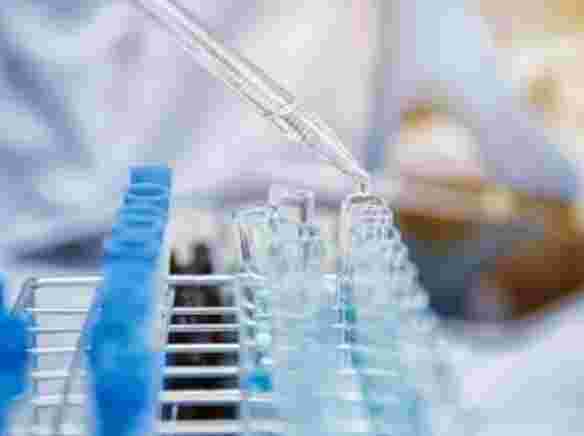
Isotope tracers play a crucial role in various scientific fields, including medicine, environmental science, and biochemistry. These tracers are classified into stable isotope tracers and radioactive isotope tracers based on their nuclear properties. While both types are used to track chemical and biological processes, their applications, advantages, and limitations differ significantly. Here, a comparative analysis of these two types of isotope tracers is provided, highlighting their characteristics, usage, and safety considerations.
Stable Isotope Tracers
Properties
Stable isotope tracers do not undergo radioactive decay. They have the same number of protons as their naturally occurring counterparts but differ in neutron count. Examples of commonly used stable isotopes include carbon-13 (13C), nitrogen-15 (15N), oxygen-18 (18O), and deuterium (2H). These isotopes exhibit identical chemical behavior to their natural analogs.
Applications
- Metabolic Studies: Stable isotope tracers are widely used in metabolic research to study nutrient absorption, protein synthesis, and energy metabolism. For instance, 13C-labeled glucose can be used to track glucose metabolism.
- Environmental and Ecological Research: Stable isotopes such as 15N and 18O can be used to study nitrogen and oxygen cycles in ecosystems, helping scientists understand pollution sources and climate change effects.
- Pharmaceutical Research: In drug development, stable isotope tracers are employed to study drug metabolism, bioavailability, and pharmacokinetics without exposing subjects to radiation.
- Food Authentication and Forensics: Stable isotope helps verify the geographical origin of food products and detect food adulteration, enhancing food safety and authenticity.
Advantages
- Non-radioactive and Safe: No radiation exposure risks, making stable isotope tracers ideal for studies involving human subjects and long-term research.
- Long-term Tracking: Since they do not decay, stable isotopes allow extended observations in biological and environmental systems.
- Compatibility with Various Analytical Techniques: Methods like mass spectrometry (MS) and nuclear magnetic resonance (NMR) effectively detect and quantify stable isotope tracers.
Limitations
- Expensive Isotope Enrichment: Producing stable isotope compounds is costly.
- Lower Sensitivity: Requires highly sensitive detection techniques, as changes in isotope ratios can be subtle.
Products & Services
Customizing Stable Isotope-labeled Compounds
Radioactive Isotope Tracers
Properties
Radioactive isotope tracers, also known as radioisotopes, are unstable isotopes that decay over time, emitting radiation in the form of alpha (α), beta (β), or gamma (γ) rays. The emitted radiation allows precise detection within biological and chemical systems. Common examples include tritium (3H), carbon-14 (14C), and phosphorus-32 (32P).
Applications
- Medical Imaging and Diagnosis: Radioactive isotope tracers are extensively used in positron emission tomography (PET) and single-photon emission computed tomography (SPECT). For example, fluorine-18 (18F) in FDG-PET scans helps visualize glucose metabolism in cancerous tissues.
- Biological and Molecular Research: Radioisotopes like 32P and 3H can be used in DNA sequencing, protein labeling, and cellular metabolism studies.
- Industrial and Environmental Applications: Radioactive isotope tracers help in detecting pipeline leaks, monitoring pollution dispersion, and dating archaeological and geological samples through radiocarbon dating (14C dating).
Advantages
- High Sensitivity and Specificity: Even minute amounts of radioactive isotope tracers can be detected using radiation detectors such as scintillation counters and Geiger counters.
- Real-time Monitoring: The decay process of radioactive isotope tracers enables real-time tracking of biological and chemical changes.
- Diverse Applications: They can be used in medicine, industry, and environmental science.
Limitations
- Health Risks: Exposure to radiation can cause cellular damage and increase cancer risk, necessitating strict safety protocols.
- Regulatory Restrictions: Radioisotope handling and disposal require compliance with strict regulatory guidelines.
- Short Half-life: Some radioisotopes decay quickly, limiting their application timeframe.
Side-by-Side Comparison
| Feature | Stable Isotope Tracers | Radioactive Isotope Tracers |
|---|---|---|
| Radioactivity | Non-radioactive | Emits radiation |
| Detection Methods | Mass spectrometry, NMR | Scintillation counters, PET, SPECT |
| Sensitivity | Lower, requires enrichment | High, even in small amounts |
| Half-Life | Permanent (does not decay) | Varies: short-lived (minutes) to long-lived (thousands of years) |
| Safety | Safe, no radiation risk | Radiation exposure risk |
| Application Scope | Metabolic studies, food, environment | Medical imaging, cancer therapy, dating methods |
| Best for Experimental Duration | Long-term studies | Short-term and real-time tracking |
| Cost | Higher for isotope-enriched compounds | Varies, but often more accessible |
| Regulations | Fewer restrictions | Strict regulatory control |
| Storage & Handling | Easy to store and handle; no special precautions needed | Requires controlled storage, radiation shielding, and safety training |
Both stable and radioactive isotope tracers have distinct roles in scientific research and industry. Stable isotopes are preferred in applications requiring long-term safety, such as metabolic studies, pharmaceutical research, and environmental science. In contrast, radioactive isotopes provide high sensitivity and real-time tracking, making them essential for medical imaging, cancer treatment, and radiocarbon dating. The choice between stable and radioactive tracers depends on the specific application, required sensitivity, safety considerations, and regulatory requirements.
 Deutsch
 English
 Arabic
 French
 Spanish
 Portuguese
 Turkish
 Dutch
Dutch
 Italiano
 Russian
 Romaian
 Portuguese (Brazil)
 Greek
Greek
