


E-Waste EPR Registration Process in India
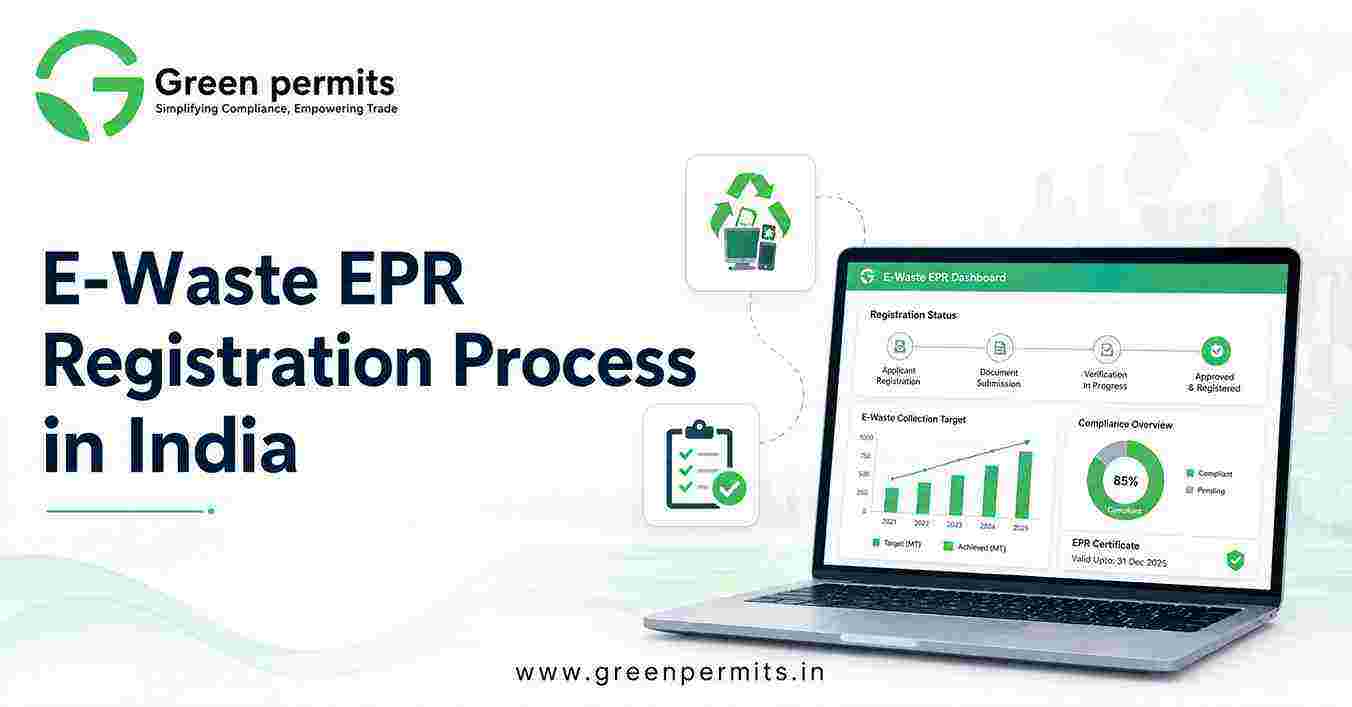
Electronic waste has become one of the fastest-growing waste streams due to the increasing use of mobile phones, laptops, computers, televisions, batteries, electrical appliances, and other electronic products. As electronic consumption increases, proper recycling and disposal of e-waste has become an important environmental responsibility for producers, manufacturers, importers, brand owners, and recyclers.
To manage this responsibility, the Government of India introduced Extended Producer Responsibility (EPR) under the E-Waste Management Rules. EPR makes producers responsible for the collection, recycling, and environmentally sound management of e-waste generated from their products.
E-Waste EPR Registration is mandatory for producers who manufacture, import, or sell electronic and electrical equipment covered under the rules. Without proper registration, businesses may face compliance issues, restrictions on operations, penalties, and difficulties in selling products in the Indian market.
What is E-Waste EPR Registration
E-Waste EPR Registration is an approval granted to producers under the e-waste compliance framework. It confirms that the producer has accepted responsibility for managing e-waste generated from the products placed in the market.
The registration is generally obtained through the Central Pollution Control Board (CPCB) portal. Producers must provide business details, product information, sales data, and EPR compliance plans during the application process.
Once registered, producers are required to meet annual recycling targets by purchasing EPR certificates from registered recyclers or fulfilling obligations through authorized recycling systems.
Who Needs E-Waste EPR Registration
E-Waste EPR registration is required for businesses that introduce electrical and electronic equipment into the Indian market.
This generally includes producers, importers, brand owners, manufacturers, online sellers, and companies selling electronic products under their own brand name.
Products commonly covered include computers, laptops, mobile phones, televisions, printers, scanners, refrigerators, washing machines, air conditioners, lighting equipment, medical devices, monitoring equipment, and consumer electrical products.
Businesses should verify whether their product category falls under the E-Waste Management Rules before starting sales, imports, or distribution.
Importance of E-Waste EPR Compliance
EPR compliance helps ensure that electronic waste is collected and recycled through authorized channels instead of being dumped, burned, or processed by informal operators.
Improper e-waste handling can release harmful substances such as lead, mercury, cadmium, flame retardants, and other toxic materials into the environment. Proper recycling helps recover valuable metals and materials while reducing environmental pollution.
For businesses, EPR registration also improves regulatory credibility. It allows producers to operate legally, meet CPCB requirements, and participate in a structured recycling system.
As environmental regulations become stricter, EPR compliance has become a core requirement for electronic product businesses.
Documents Required for E-Waste EPR Registration
Documentation is an important part of the application process. Incorrect or incomplete documents may lead to delays or rejection.
The documents generally required include:
- Company Incorporation Certificate
- PAN Card
- GST Registration Certificate
- Import Export Code, if applicable
- Product details and category information
- Sales data and projected sales details
- Authorized signatory documents
- Brand ownership or authorization documents
- EPR plan and compliance details
Additional documents may be required depending on the business model, product category, and application type.
E-Waste EPR Registration Process
The registration process begins with identifying whether the products fall under the e-waste category. Product classification is important because the EPR obligation depends on the category of electronic and electrical equipment.
After classification, the business prepares all required documents and product details. This includes company information, product descriptions, sales data, import details, and compliance strategy.
The application is then filed on the CPCB EPR portal. The portal requires submission of business information, product categories, estimated sales quantity, and other compliance-related details.
After submission, CPCB reviews the application and may ask for clarification or additional documents. Once the application is verified, EPR registration is granted to the producer.
After receiving registration, the producer must comply with annual EPR targets and submit required returns as per the applicable rules.
EPR Targets and Certificates
Under the EPR framework, producers are required to meet recycling obligations based on the quantity of products placed in the market.
The producer can fulfill these obligations through EPR certificates generated by registered e-waste recyclers. These certificates represent recycling carried out through authorized facilities.
Producers must ensure that certificates are purchased from valid registered recyclers and recorded properly on the CPCB portal.
Proper tracking of EPR certificates is essential for annual compliance and return filing.
Role of Registered Recyclers
Registered recyclers play a major role in the EPR system. They collect and process e-waste through approved recycling facilities and generate EPR certificates based on recycling activities.
These recyclers recover valuable materials such as copper, aluminum, plastics, precious metals, and other reusable resources from electronic waste.
Producers depend on authorized recyclers to fulfill their recycling obligations and maintain compliance under the e-waste rules.
Compliance After EPR Registration
Obtaining EPR registration is only the first step. Producers must continue maintaining compliance every year.
Businesses are required to monitor sales data, calculate recycling targets, purchase EPR certificates, maintain records, and file returns on time.
Failure to meet EPR targets or submit returns may result in penalties, notices, or restrictions on business operations.
Regular compliance tracking helps businesses avoid last-minute issues and maintain smooth regulatory performance.
Common Challenges in E-Waste EPR Registration
Many businesses face challenges during registration because of incorrect product categorization, incomplete documentation, wrong sales data, or lack of clarity about EPR obligations.
Importers often face additional difficulties because product details, brand authorization, and import data must be properly aligned with CPCB requirements.
Companies also struggle with annual compliance if they do not maintain proper records or plan certificate procurement in advance.
Professional guidance helps businesses complete registration correctly and manage ongoing compliance smoothly.
Benefits of Professional EPR Consulting
An experienced EPR consultant helps producers understand their obligations and complete the registration process efficiently.
Consulting support can help with product classification, document preparation, CPCB portal filing, EPR target calculation, certificate management, annual return filing, and compliance tracking.
For businesses dealing with multiple product categories or large sales volumes, professional support can reduce errors and improve compliance management.
Learn the Complete E-Waste EPR Registration Process
Planning to apply for E-Waste EPR Registration in India? Understanding product categories, CPCB portal filing, documentation, EPR targets, certificate requirements, and annual compliance obligations is essential before starting.
Read the complete guide here:
👉 https://www.greenpermits.in/10/epr-registration-for-e-waste-process-documents-fees/
📞 Get Expert Assistance for E-Waste EPR Registration
Need assistance with E-Waste EPR Registration, CPCB portal filing, product categorization, EPR target calculation, certificate management, or annual return filing? The experts at Green Permits Consulting can guide you throughout the complete process.
🌐 Website: https://www.greenpermits.in
📞 Phone: +91 78350 06182
📧 Email: wecare@greenpermits.in
 Deutsch
 English
 Arabic
 French
 Spanish
 Portuguese
 Turkish
 Dutch
Dutch
 Italiano
 Russian
 Romaian
 Portuguese (Brazil)
 Greek
Greek
